
Landlord EPC C 2030 Plan: Essential Preparation Guide
Government intends a higher EPC standard for privately rented homes from 1 October 2030, subject to legislation. See how West Midlands landlords can prepare.
Regulatory position — 4 September 2026: Current domestic MEES in England and Wales requires EPC E unless a valid exemption applies. Government intends an EPC C-equivalent standard from 1 October 2030, but the higher standard, planned £10,000 cap and future £30,000 maximum penalty remain subject to further legislation and Parliamentary approval. Check current GOV.UK guidance.
The Return of the EPC C Deadline: A Guide for West Midlands Landlords and Homeowners
For the past year, the UK property market has been in a state of flux regarding energy efficiency standards. Following the previous administration's decision to scrap the proposed 2025/2028 deadlines for Minimum Energy Efficiency Standards (MEES), many landlords in Birmingham, Coventry, and Wolverhampton breathed a sigh of relief. However, that reprieve has proven short-lived. Following the July 2024 General Election, the new Labour government has moved swiftly to put energy efficiency back at the top of the legislative agenda.
Energy Secretary Ed Miliband has officially confirmed that the government will reintroduce the requirement for all private rented sector (PRS) properties to achieve an Energy Performance Certificate (EPC) rating of C or above by 2030. This announcement, made as part of the broader 'Warm Homes Plan', represents a significant shift for the rental sector in the West Midlands, where a substantial portion of the housing stock—particularly the Victorian and Edwardian terraces of Dudley, Walsall, and West Bromwich—currently sits at a D or E rating.
For property owners across the West Midlands, from the suburbs of Solihull to the rural reaches of Stafford, the countdown has officially restarted. This guide breaks down what these changes mean for you, the financial support available through government grants, and the practical steps required to future-proof your investment using our EPC assessment services.
Understanding the 2030 EPC C Requirement
The core of the new policy is a return to a mandatory minimum rating. While the specific 'interim' dates (such as the previously suggested 2025 for new tenancies) are still being finalised in the upcoming Renters' Rights Bill, the 2030 'backstop' date is now a firm commitment.
Why the Change?
Fuel poverty and carbon emissions are the primary drivers. The government aims to lift over a million households out of fuel poverty. In areas like Wolverhampton and Birmingham, where energy costs hit hardest in older, uninsulated properties, improving the building fabric is seen as the only long-term solution to lowering bills.
What the Regulation Means for You:
- Legal Compliance: By 2030, it will likely be illegal to rent out a property with an EPC rating of D or E.
- Market Value: Properties with higher EPC ratings are increasingly attracting a premium. Conversely, 'un-improvable' properties may face a 'brown discount'.
- Mortgage Eligibility: Many buy-to-let lenders are already introducing 'green' mortgages with better rates for EPC A-C properties, while some may refuse to lend on E-rated properties in the near future.
The Financial Landscape: Grants and Funding in 2024/25
Upgrading a property from an E to a C can be costly, often ranging from £5,000 to £15,000 depending on the starting point. However, the government has pledged billions in funding to support this transition. If you own property in the West Midlands, you may be eligible for one of the following schemes:
1. The ECO4 Scheme
The Energy Company Obligation (ECO4) is a government energy efficiency scheme in Great Britain to help reduce carbon emissions and tackle fuel poverty. It focuses on low-income and vulnerable households. If your tenants receive certain benefits, you could potentially have insulation, heat pumps, or even solar panels installed at zero cost to you. This is particularly relevant for landlords in high-deprivation areas of Birmingham and Walsall.
2. The Great British Insulation Scheme (GBIS)
Formerly known as ECO+, GBIS is designed to deliver single insulation measures (such as loft or cavity wall insulation) to a broader range of households. Unlike ECO4, it isn't strictly limited to those on benefits; it also includes households in lower Council Tax bands (A-D in England) with an EPC of D or below. You can check your grant eligibility through our portal to see if your property qualifies.
3. The Boiler Upgrade Scheme (BUS)
If you are looking to move away from gas, the Boiler Upgrade Scheme provides a £7,500 grant towards the installation of an air-source heat pump or a ground-source heat pump. With the government’s push for electrification, replacing an aging combi-boiler in a Solihull semi-detached home with a heat pump is becoming a much more viable financial decision.
4. The Warm Homes Plan
This is the new government's flagship policy, promising an additional £6.6 billion over the next parliament to upgrade five million homes. We expect to see more details on how this will integrate with local authorities in the West Midlands and Staffordshire by the end of 2024.
The Roadmap to Compliance: A Step-by-Step Guide
Don't wait until 2029 to act. The demand for qualified assessors and installers in the West Midlands is expected to skyrocket as the deadline approaches. Follow these steps to ensure compliance:
Step 1: Secure an Accurate EPC Assessment
Your current EPC might be several years old. Energy assessment conventions change; what was a high D five years ago might be an E today. The first step is to book a retrofit assessment or a standard EPC to establish your baseline.
Step 2: The 'Fabric First' Approach
Before thinking about solar panels or heat pumps, focus on the building fabric. This is the cornerstone of the PAS 2035 standards used in professional retrofitting.
- Loft Insulation: Ensure it is at least 270mm thick.
- Cavity Wall Insulation: Often the most cost-effective way to jump a whole EPC grade.
- Internal/External Wall Insulation: Necessary for the solid-wall Victorian terraces common in Dudley and Wolverhampton.
Step 3: Heating and Renewables
Once the property is insulated, look at heat sources. Modern condensing boilers are efficient, but the EPC methodology (SAP 10) increasingly rewards low-carbon heating. Solar PV panels are now one of the fastest ways to move a property from a D to a C rating.
Step 4: Documentation
Ensure all works are documented. If you install floor insulation, take photos before the floorboards go back down. This evidence is crucial for your assessor to give you the credit you deserve on the final EPC certificate.
Local Market Insight: Why the West Midlands is Unique
The West Midlands presents a unique challenge for the 2030 target. Unlike London, where apartments dominate, our region has a high density of pre-1919 solid-wall housing.
In Birmingham, the 'Big City Plan' and various regeneration projects are pushing for higher standards, but the private rental sector in areas like Selly Oak and Edgbaston remains dominated by older stock. In Coventry, the student housing market is under particular pressure to improve, as modern Purpose Built Student Accommodation (PBSA) sets a high bar for energy efficiency that traditional HMOs must now match.
In Stafford and West Staffordshire, we see a different trend: many rural properties are off the gas grid. For these owners, the transition to heat pumps and high-performance glazing is not just a regulatory requirement but a necessity to manage high oil or LPG costs.
Regardless of where your property is located, the local RICS market is already responding. We are seeing RICS survey packages increasingly highlight 'energy transition risk' in their valuations. A property that cannot easily reach a C rating may see its valuation suppressed by 5-10% compared to a compliant counterpart.
Why Choose Skyline Technical Services?
Navigating the path to EPC C compliance requires more than just a certificate; it requires a strategy. At Skyline Technical Services, we serve the entire West Midlands—from the heart of Wolverhampton to the quiet streets of Solihull.
- Local Expertise: We understand the specific housing archetypes of the Black Country and Birmingham. We know what works for a 1930s semi vs. a 1990s apartment.
- Comprehensive Services: From property inventory services for new tenancies to complex PAS 2035 Retrofit Assessments, we cover the full lifecycle of property management.
- Accredited Quality: Our assessors are fully accredited, ensuring that your EPC is accurate, defensible, and provides a clear pathway to a C rating.
- Grant Integration: We don't just assess; we advise. We can help you identify which measures will likely be covered by ECO4 or GBIS, saving you thousands in capital expenditure.
Frequently Asked Questions
What if my property can never reach an EPC C?
Under current MEES rules, there is a 'cost cap' (currently £3,500, but expected to rise). If you spend up to this cap and the property still isn't a C, you can apply for an exemption. However, the new government may increase this cap significantly—potentially to £10,000—to encourage deeper retrofits.
Can I still sell my property if it's an EPC E?
Yes, you can currently sell a property with any EPC rating. However, the buyer's lender may retain a portion of the mortgage funds until energy improvements are made, or they may offer a lower loan-to-value (LTV) ratio, which can shrink your pool of potential buyers.
Does a new boiler automatically get me to a C?
Not necessarily. While a new A-rated boiler helps, if your walls and roof are uninsulated, the heat will still escape. The EPC calculation looks at the 'total package'. Often, insulation is more effective at raising a score than a boiler upgrade alone.
How long does an EPC assessment take?
A standard domestic EPC assessment usually takes between 45 and 90 minutes on-site, depending on the size and complexity of the property. You will typically receive your certificate and report within 24-48 hours.
Take Action Today
The 2030 deadline might feel distant, but with the inevitable rush for contractors and the potential for rising material costs, early movers will save the most money. Whether you have a single rental property in Walsall or a large portfolio across the West Midlands, Skyline Technical Services is here to help.
Ready to future-proof your property? Contact us today to book your EPC assessment or enquire about our full retrofit coordination services. Let’s ensure your property remains a valuable, compliant, and energy-efficient asset for years to come.
Ready to take action?
Get a fast, no-obligation quote from our accredited team — covering EPCs, surveys, retrofit and more.
Related Articles
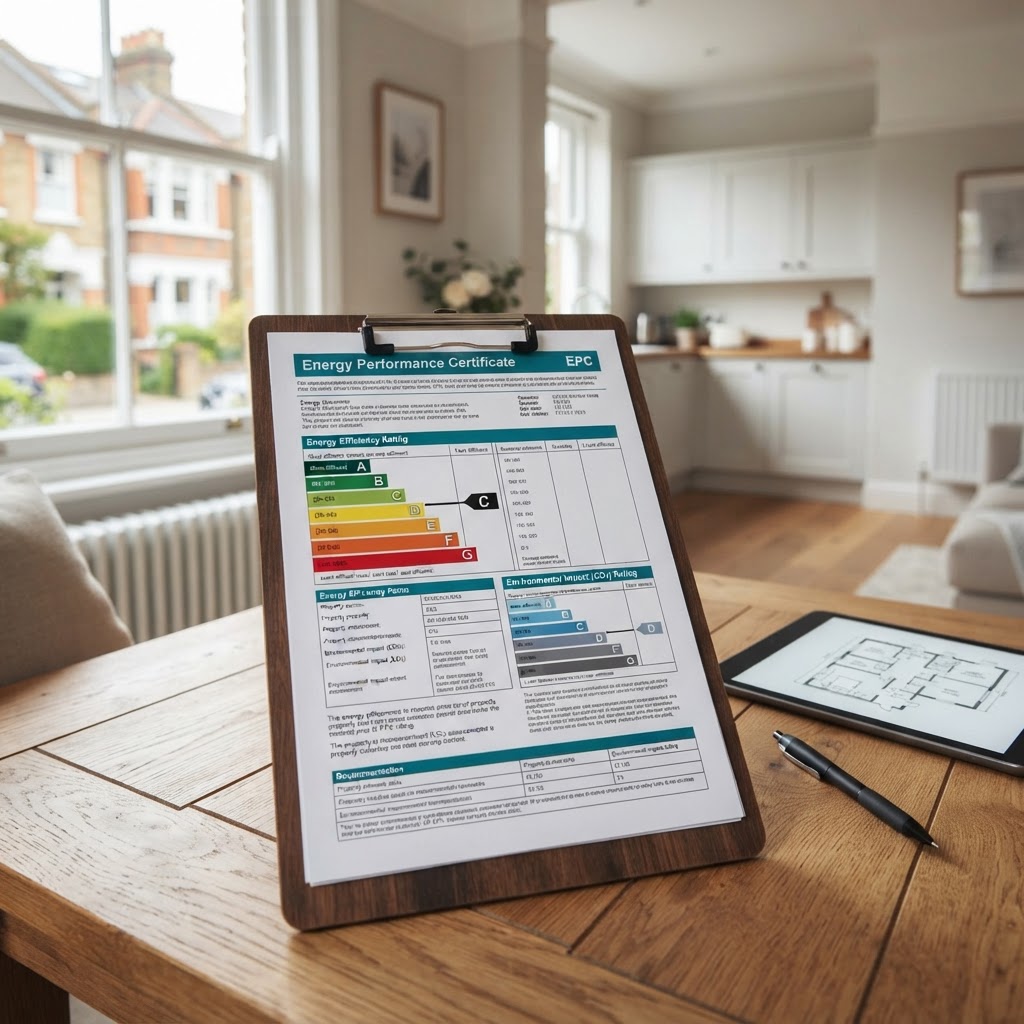
EPC C Deadline: Why Your Rating Impacts Property Value
Discover how the 2030 EPC C deadline is reshaping West Midlands property values and why energy efficiency is now a critical asset-management strategy.
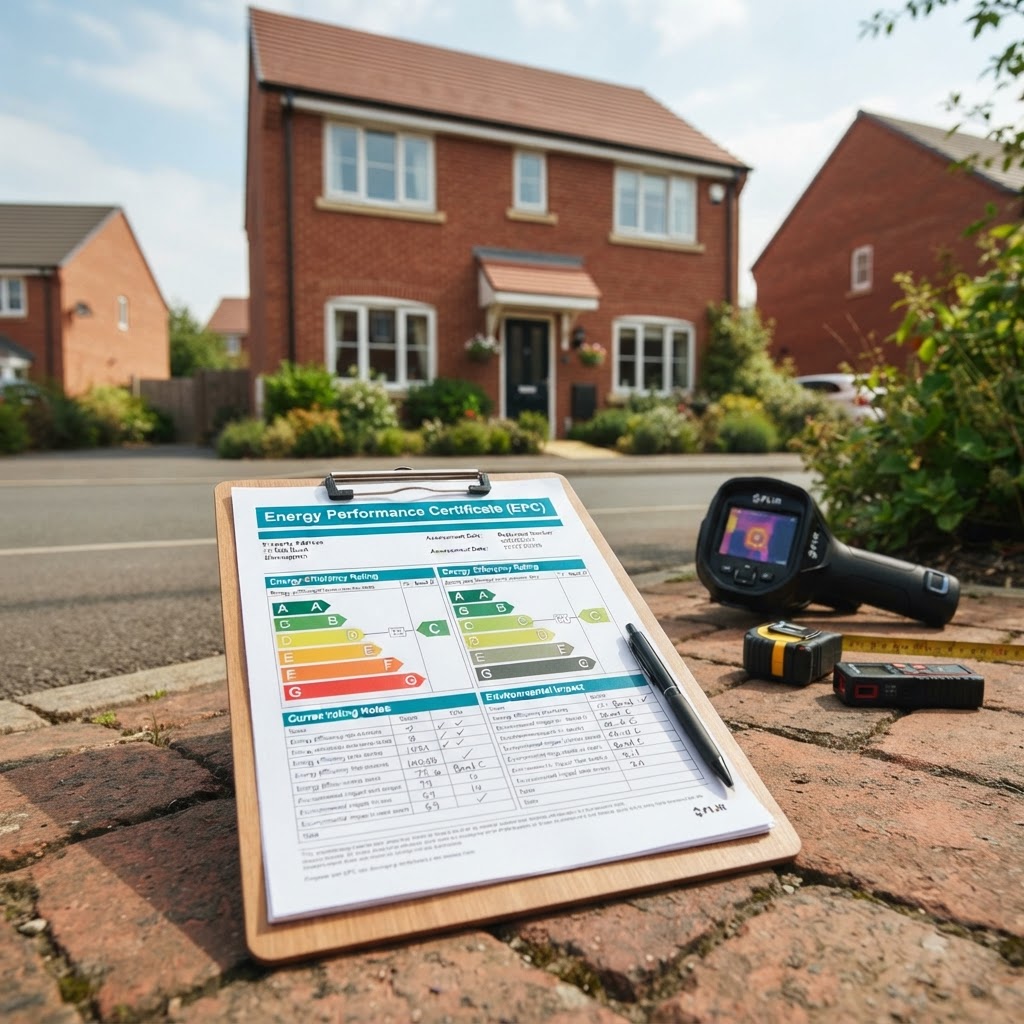
EPC C by 2030: A Landlord’s Action Plan for the West Midlands
Prepare your rental portfolio for the 2030 EPC C deadline. Learn how to navigate the £10,000 cost cap, new methodology shifts, and West Midlands grant support.