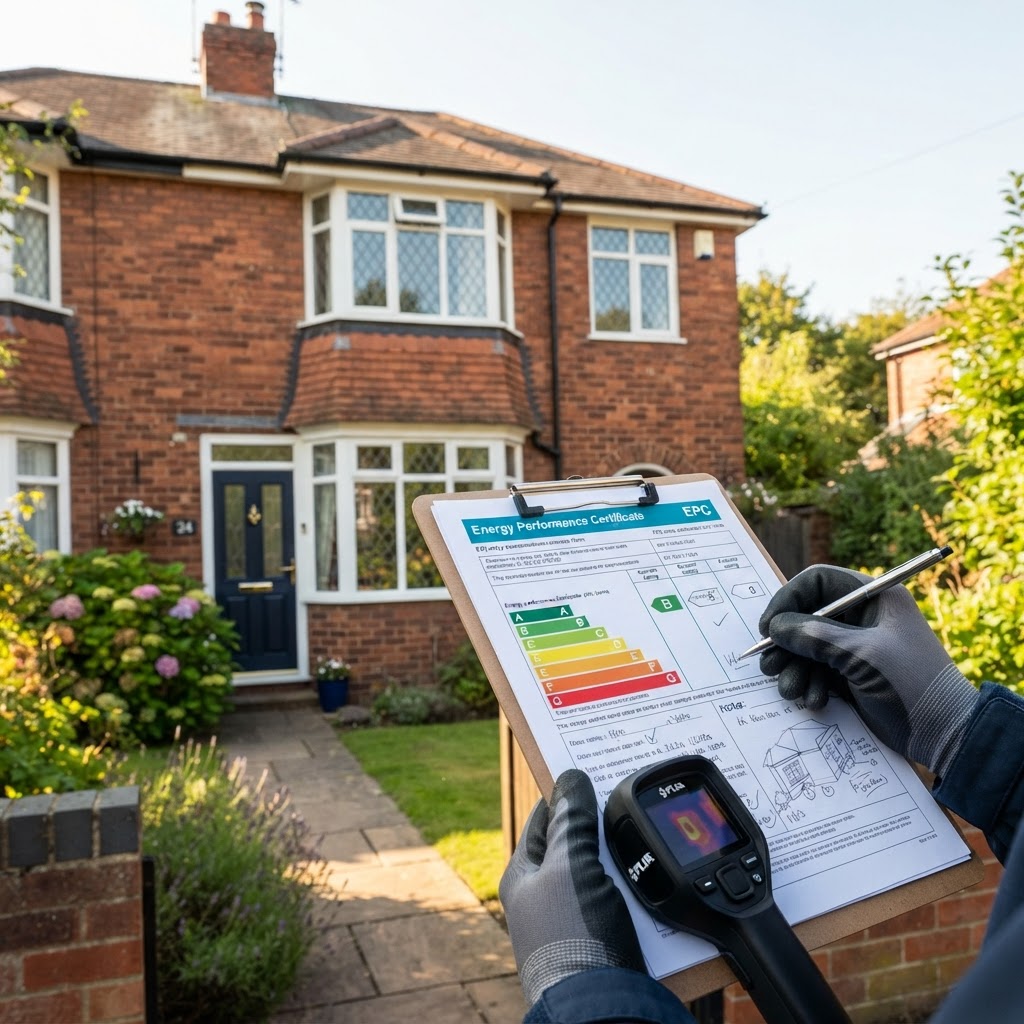
The Planned £10,000 EPC C Cost Cap: West Midlands Landlord Guide
The government intends an EPC C-equivalent standard from 1 October 2030, with a planned £10,000 cost cap subject to legislation. See what it could mean for West Midlands landlords.
Regulatory position — 4 September 2026: Current domestic MEES in England and Wales requires EPC E unless a valid exemption applies. Government intends an EPC C-equivalent standard from 1 October 2030, but the higher standard, planned £10,000 cap and future £30,000 maximum penalty remain subject to further legislation and Parliamentary approval. Check current GOV.UK guidance.
The £10,000 EPC C Cost Cap: A West Midlands Landlord Guide to the Warm Homes Plan
The landscape for UK landlords has shifted dramatically this month. Following the government's latest updates to the Warm Homes Plan, the path to the 2030 Energy Performance Certificate (EPC) deadline is now clear, but it comes with a significant financial adjustment. The previous £3,500 cost cap for energy efficiency improvements is being replaced by a much more substantial £10,000 investment ceiling.
For property owners across Birmingham, Coventry, and the wider West Midlands, this represents a nearly 200% increase in potential compliance costs. With the government confirming that all private rented homes must reach an EPC rating of C by October 2030, the pressure is on to balance regulatory requirements with financial viability. However, the news isn't all daunting; the concurrent rollout of the £13.2 billion Warm Homes Plan offers a lifeline for those ready to act now.
At Skyline Technical Services, we are seeing a surge in enquiries from landlords in Wolverhampton, Walsall, and Dudley who are concerned about how these changes affect their portfolios. This guide breaks down the new regulations, the grants available, and how you can navigate the transition without breaking the bank.
The New Regulatory Framework: EPC C and the £10,000 Cap
As of June 2026, the government has solidified the roadmap for the Private Rented Sector (PRS). According to the HomeOwners Alliance, the key pillars of the new policy are:
- The 2030 Deadline: All domestic private rented properties in England and Wales must have a valid EPC rating of C or higher by 1 October 2030.
- The £10,000 Cost Cap: Landlords are expected to spend up to £10,000 (including VAT) to reach the C rating. If the property still hasn't reached the target after spending this amount, a high-cost exemption can be registered.
- Increased Fines: Non-compliance is no longer a minor oversight. Government plans to raise the future maximum penalty from the current £5,000 total per property to up to £30,000 per property per breach, subject to further legislation.
Why the Cap Changed
The shift from £3,500 to £10,000 reflects the reality of retrofitting older housing stock. In areas like Stafford and West Staffordshire, where many rental properties are pre-war terraces or detached rural homes, a £3,500 budget often barely covered basic loft insulation and a boiler service. The new cap is designed to encourage "whole-house" retrofitting, including high-impact measures like external wall insulation and heat pump installations.
Navigating the Warm Homes Plan (WHP) in the West Midlands
The Warm Homes Plan is the government’s flagship £13.2 billion investment strategy running through 2030. For landlords in the West Midlands, this plan is delivered through several key streams that can significantly offset the £10,000 compliance cap.
1. Warm Homes: Local Grant
This is a critical resource for landlords with properties in Birmingham and Solihull. The Warm Homes: Local Grant provides up to £30,000 for energy-efficient home improvements. While it is targeted at low-income households, private tenants who meet the income threshold can apply with their landlord's permission. This allows landlords to upgrade their properties to an EPC C rating using government funds rather than their own capital.
2. The Boiler Upgrade Scheme (BUS)
If your property currently relies on an aging gas or oil boiler, the BUS offers a £7,500 grant towards the installation of an air-source heat pump. In the West Midlands, where local authorities are pushing for decarbonisation, this grant is a cornerstone of the transition. Unlike other schemes, the BUS is not means-tested, making it accessible to a wider range of landlords.
3. ECO4 and the Upcoming ECO5
While ECO4 is reaching its final stages, the industry is preparing for the launch of ECO5. These schemes require energy suppliers to fund improvements for vulnerable tenants. If your tenants receive certain benefits, you could potentially receive full funding for internal wall insulation, solar panels, and smart thermostats.
The Role of PAS 2035 and Retrofit Assessments
You cannot simply hire a builder to install random energy measures and hope for an EPC C. Under the new standards, specifically PAS 2035:2023, any government-funded retrofit must follow a strict professional process. This ensures that improvements don't cause issues like damp or poor ventilation.
Before you begin work, you should book a retrofit assessment. A qualified Retrofit Assessor will create a Medium-Term Improvement Plan (MTIP) for your property. This plan acts as a technical roadmap, ensuring that every pound of your £10,000 cap is spent on the most effective measures for that specific building type.
West Midlands Context: A Retrofit Hotspot
The West Midlands Combined Authority (WMCA) has been particularly proactive, securing over £700 million for regional retrofitting initiatives. This is vital because our region has a high concentration of "hard-to-treat" homes.
- Birmingham & The Black Country: Many Victorian and Edwardian terraces in Dudley and Walsall require solid wall insulation, which is significantly more expensive than cavity wall insulation. The £10,000 cap will likely be reached quickly here, making grant access essential.
- Solihull & Stafford: These areas have a mix of mid-century semi-detached homes that are ideal candidates for solar PV and loft top-ups, often reaching a C rating for well under the £10,000 limit.
Step-by-Step Compliance Checklist for Landlords
- Audit Your Portfolio: Check the current SAP scores on your existing certificates. If you are at a high 'D' (e.g., 67-68 points), you may only need minor upgrades like LED lighting and cylinder insulation to hit the 69 points required for a 'C'.
- Get a Professional Assessment: Don't rely on an old EPC. Use our EPC assessment services to get a current, accurate baseline.
- Check Grant Eligibility: Use our grant check tool to see if your tenants or property location qualify for the Warm Homes: Local Grant or ECO funding.
- Plan for 2029: Remember that the methodology for calculating EPCs will change to the Home Energy Model (HEM) in October 2029. Measures that work under the current SAP system might be weighted differently under HEM.
- Document Everything: If you spend the full £10,000 and fail to reach a C, you must have itemised invoices and a post-improvement EPC to register your exemption on the PRS Exemptions Register.
What This Means for Birmingham & West Midlands Property Owners
The transition to EPC C is no longer a "maybe"—it is a legal certainty with a firm 2030 deadline. For property owners in Coventry, Wolverhampton, and the surrounding areas, the next four years are a critical window.
By acting now, you can take advantage of the current £13.2 billion funding pot before it becomes oversubscribed as the deadline nears. Furthermore, improving your energy rating isn't just about compliance; it protects your property's value. We are seeing a growing "brown discount" in the West Midlands market, where properties with low EPC ratings are selling for significantly less than their energy-efficient counterparts.
If you are considering selling or expanding your portfolio, our RICS survey packages now include high-level energy advice to help you understand the future liabilities of any new acquisition.
Why Choose Skyline Technical Services?
Navigating the complexities of the Warm Homes Plan and PAS 2035 requires local expertise. Skyline Technical Services provides a comprehensive suite of property inventory services and energy assessments tailored to the West Midlands market.
We understand the specific building archetypes of Birmingham, Stafford, and the Black Country. Our assessors don't just give you a certificate; we provide actionable insights into how to reach EPC C efficiently, helping you manage the £10,000 cap effectively. Whether you need a single EPC or a full retrofit plan for a large portfolio, we offer the technical precision required to keep you compliant and your tenants warm.
Frequently Asked Questions
Q: What happens if I can't reach EPC C even after spending £10,000? A: If you have spent the maximum £10,000 cap on recommended improvements and the property is still rated D or below, you can apply for a 'High Cost' exemption. This exemption usually lasts five years, after which you must reassess based on current technology and costs.
Q: Does the £10,000 cap include grants? A: No. The cap refers to the landlord's personal contribution. If you receive a £7,500 Boiler Upgrade Grant and spend £2,500 of your own money, you have only counted £2,500 towards your cap.
Q: Is the 2030 deadline the same for new and existing tenancies? A: Yes. The government has simplified the rules: all private rented properties must meet the C standard by 1 October 2030, regardless of when the tenancy began.
Q: Can I increase the rent to cover the £10,000 cost? A: While there are no specific laws preventing rent increases to cover property improvements, you must follow standard rent-increase procedures. However, energy-efficient homes often command higher rents and have lower void periods, providing a natural return on investment.
Ready to secure your portfolio's future? Contact Skyline Technical Services today to book your EPC or Retrofit Assessment and ensure you stay ahead of the 2030 deadline.
Ready to take action?
Get a fast, no-obligation quote from our accredited team — covering EPCs, surveys, retrofit and more.
Related Articles
EPC C Deadline: Why Your Rating Impacts Property Value
Discover how the 2030 EPC C deadline is reshaping West Midlands property values and why energy efficiency is now a critical asset-management strategy.
EPC C by 2030: A Landlord’s Action Plan for the West Midlands
Prepare your rental portfolio for the 2030 EPC C deadline. Learn how to navigate the £10,000 cost cap, new methodology shifts, and West Midlands grant support.