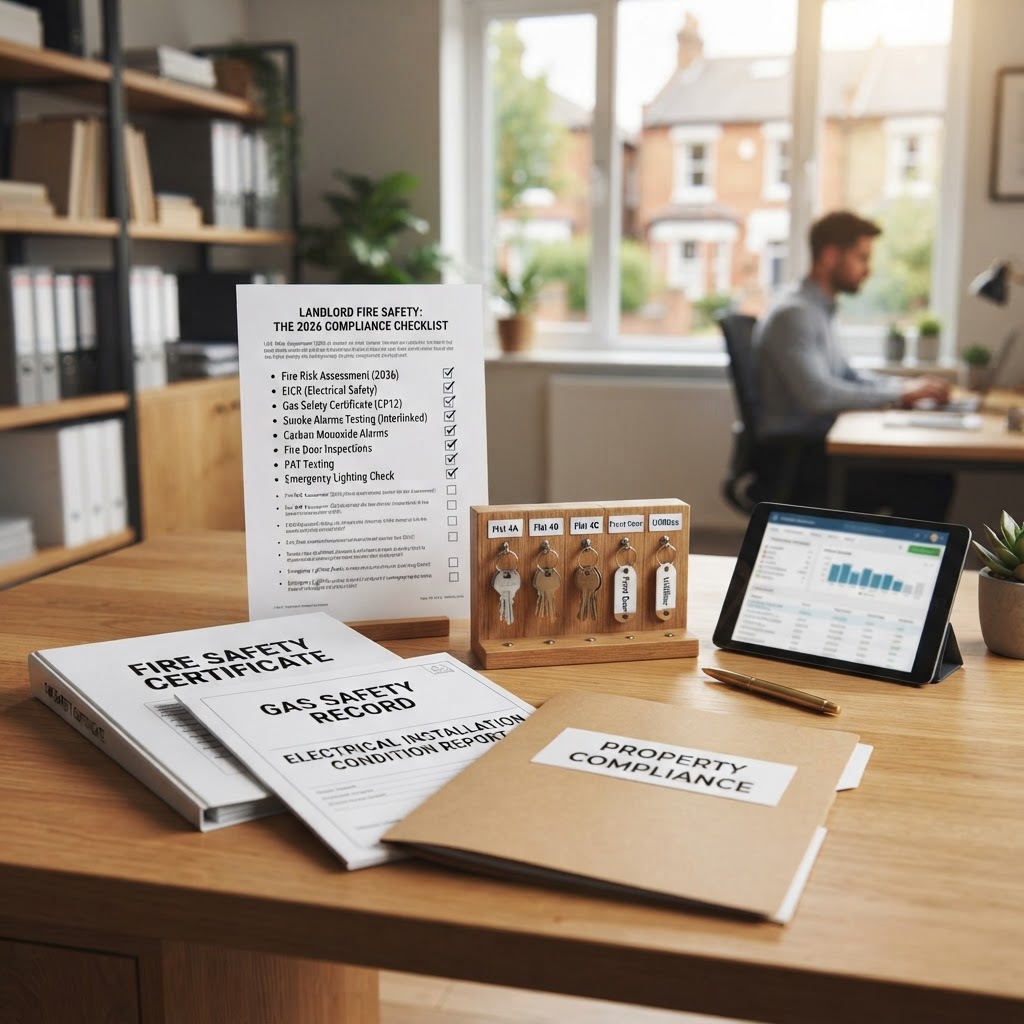
Landlord Fire Safety: The 2026 Compliance Checklist
Ensure your rental property meets the latest fire safety standards. Our 2026 guide covers smoke alarms, CO detectors, and essential landlord compliance.
Fire safety is a non-negotiable pillar of landlord compliance in the West Midlands. With the regulatory landscape evolving, including the 2022 amendments to the Smoke and Carbon Monoxide Alarm (England) Regulations, landlords in Birmingham, Coventry, and beyond must ensure their properties are not only safe but also fully documented to avoid local authority enforcement and potential civil penalties. Whether you are managing a Victorian terrace in Wolverhampton or a modern apartment in Solihull, your obligations remain consistent under national law.
Understanding Your Legal Obligations
The primary legislation governing fire safety in the private rented sector is the Smoke and Carbon Monoxide Alarm (England) Regulations 2015, as amended in 2022. These regulations mandate specific requirements for every storey of a rental property and rooms containing fuel-burning appliances. Failure to comply can lead to remedial notices from your local housing authority and fines of up to £5,000 per breach.
Smoke Alarm Requirements
- Placement: You must ensure at least one smoke alarm is equipped on every storey of the premises used as living accommodation.
- Testing: Alarms must be in proper working order on the day a new tenancy begins. While the law does not specify the type of alarm, the Housing Health and Safety Rating System (HHSRS) strongly recommends mains-wired, interlinked alarms for better protection.
Carbon Monoxide (CO) Alarm Requirements
- Placement: A carbon monoxide alarm must be equipped in any room used as living accommodation which contains a fixed combustion appliance (excluding gas cookers).
- Scope: Since 1 October 2022, this requirement has been extended to include gas boilers, meaning almost every property with a gas central heating system requires a CO alarm.
The 2026 Compliance Checklist
To protect your investment and your tenants, use this checklist to audit your property compliance:
- Pre-Tenancy Check: Test every smoke and CO alarm on the day the tenancy starts. Record the test date and result in your property inventory or mid-term inspection report.
- Tenant Reporting: If a tenant reports a faulty alarm, you must repair or replace it as soon as reasonably practicable. Document the report and your subsequent action.
- HMO Considerations: If your property is a House in Multiple Occupation (HMO), you may be subject to stricter fire safety standards, including specific grades of fire detection systems. Always check your local council's specific HMO licensing conditions.
- Record Keeping: Maintain a log of all safety checks. Under the upcoming Private Rented Sector Database requirements, having a clear, digital trail of your compliance will be essential.
Local Application: West Midlands Standards
Local authorities across the West Midlands, including Birmingham City Council and Stafford Borough Council, actively enforce these regulations. During property inspections, officers look for evidence that alarms are not only present but functional. Relying on a tenant to 'check' the alarm is insufficient; as a landlord, you are responsible for ensuring the equipment is compliant at the start of every new tenancy.
How Skyline Can Help
At Skyline Technical Services, we understand that compliance is about more than just ticking boxes—it is about protecting your asset and your tenants. We provide professional inventory services and mid-term inspections that include rigorous testing and documentation of fire safety equipment. By integrating these checks into our inventory and mid-term inspection workflows, we provide you with the evidence needed to prove compliance.
- Professional Inventories: We document the presence and functionality of all safety alarms at the start of your tenancy.
- Mid-Term Inspections: We verify that alarms remain in place and functional throughout the duration of the lease.
- Digital Records: Our reports are stored securely, helping you prepare for the upcoming PRS Database requirements.
Frequently Asked Questions
Do I need a CO alarm if I only have a gas cooker?
No, the regulations specifically exclude gas cookers from the requirement for a carbon monoxide alarm, provided there are no other fuel-burning appliances in the room.
Are battery-operated alarms acceptable?
Yes, the regulations do not mandate mains-wired alarms, but they must be in working order. However, mains-wired, interlinked alarms are considered best practice under HHSRS guidance.
What happens if I ignore a remedial notice?
If you fail to comply with a remedial notice served by your local authority, they have the power to enter the premises, install the required alarms, and charge you for the costs, in addition to issuing a civil penalty.
How often should I test my alarms?
While the law requires them to be working at the start of a tenancy, best practice is to test them during every mid-term inspection to ensure ongoing safety.
Does this apply to social housing?
No, the Smoke and Carbon Monoxide Alarm (England) Regulations do not apply to registered providers of social housing.
Need to ensure your property is fully compliant? Book an inspection or request a quote today to secure your property and your peace of mind.
Ready to take action?
Get a fast, no-obligation quote from our accredited team — covering EPCs, surveys, retrofit and more.
Related Articles

Landlord Gas Safety in 2026: Current Duties and Records
Annual checks, tenant records, carbon monoxide alarms and the planned PRS Database explained for West Midlands landlords.

Landlord Fire Safety: The 2026 Compliance Checklist
Ensure your rental property meets the latest fire safety standards. Our 2026 guide covers smoke alarms, CO detectors, and essential landlord compliance.