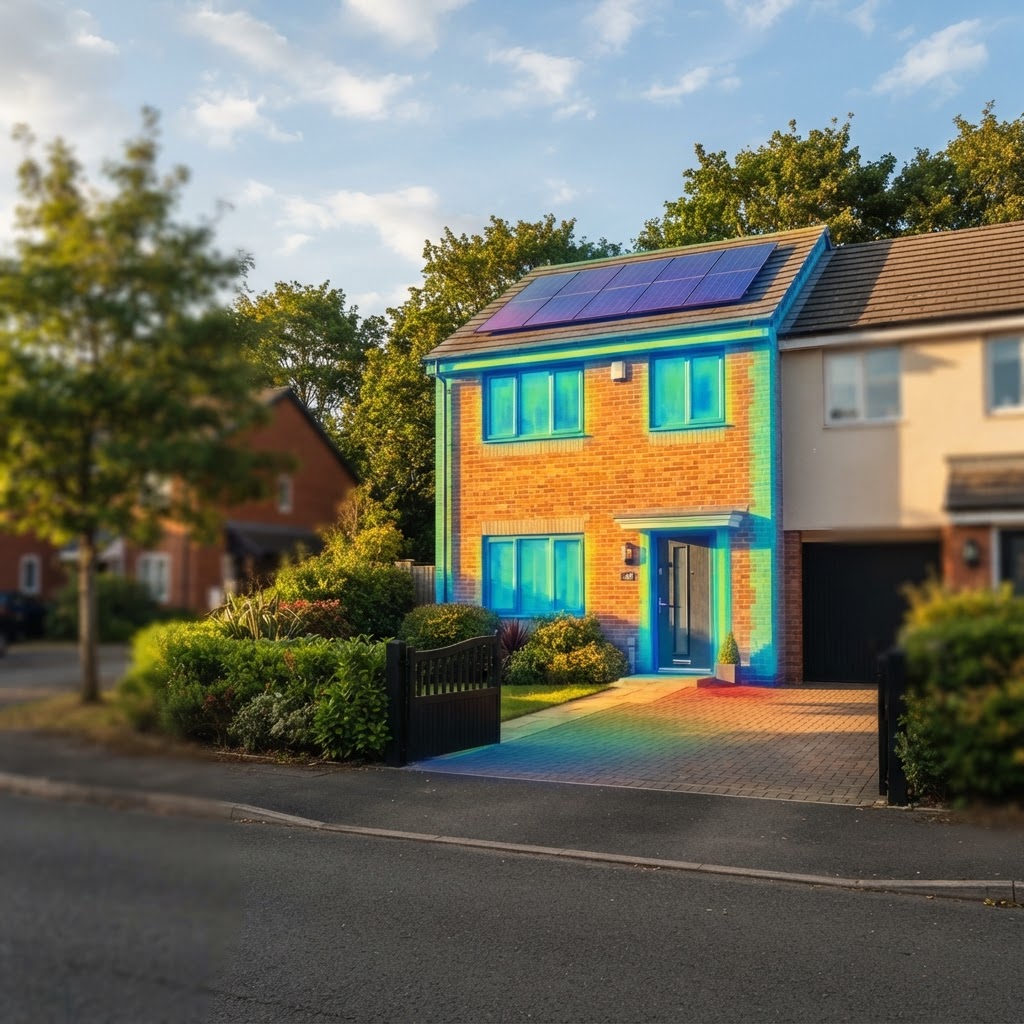
The Planned EPC Methodology Shift: A West Midlands Landlord Guide
Learn how planned Home Energy Model reforms may affect EPC ratings and preparations for the government's intended 2030 standard.
Regulatory position — 4 September 2026: Current domestic MEES in England and Wales requires EPC E unless a valid exemption applies. Government intends an EPC C-equivalent standard from 1 October 2030, but the higher standard, planned £10,000 cap and future £30,000 maximum penalty remain subject to further legislation and Parliamentary approval. Check current GOV.UK guidance.
The 2027 EPC Methodology Shift: A West Midlands Landlord Guide
If you own or manage rental property in Birmingham, Coventry, or the wider West Midlands, the goalposts for energy compliance have just moved. While the headline news of the last few weeks has focused on the £15 billion Warm Homes Plan, a more technical — and potentially more disruptive — change is looming: the total replacement of the Standard Assessment Procedure (SAP) with the new Home Energy Model (HEM) in 2027.
This isn't just a change in software; it is a fundamental shift in how your property’s energy efficiency is calculated. For landlords in Wolverhampton, Dudley, and Solihull, the transition represents a critical window of opportunity. Acting under the current rules could be the difference between a straightforward upgrade and a costly, complex retrofit. Government intends an EPC C-equivalent higher standard from 1 October 2030, subject to legislation, so understanding planned methodology changes is useful for long-term property planning.
The End of SAP: Introducing the Home Energy Model (HEM)
For decades, Energy Performance Certificates (EPCs) have been generated using SAP. While reliable, SAP has often been criticised for being a 'blunt instrument' that doesn't always reflect real-world energy use. The government plans to replace SAP with the Home Energy Model, but landlords should check current GOV.UK guidance for the confirmed implementation date and detailed methodology.
What is Changing?
Unlike the current system, the Home Energy Model uses a high-frequency simulation. Instead of looking at a property as a static box, it accounts for:
- Local Weather Data: The model uses specific regional weather patterns, meaning a Victorian terrace in Stafford will be assessed differently than one in Cornwall.
- Property Orientation: The exact direction your house faces and how much solar gain it receives throughout the day will now significantly impact the score.
- Smart Technology Integration: The HEM is designed to better recognise the benefits of smart thermostats, battery storage, and demand-side response technologies.
For many West Midlands property owners, this shift is a double-edged sword. While it more accurately rewards modern technology, early simulations suggest that some properties currently sitting on a 'borderline' C rating under SAP could drop into a D or E rating under the new HEM methodology. This is why our EPC assessment services are seeing a surge in bookings from proactive landlords looking to lock in their ratings now.
Why Early Planning Matters
The intended higher standard is not yet law. The January 2026 government response proposes transitional treatment for properties that achieve EPC C under the existing Energy Efficiency Rating before 1 October 2029, but the detail remains subject to legislation.
Under the government's intended transition, properties not covered by the proposed grandparenting arrangement would be assessed against the new metrics. Because the final legal and technical detail is still developing, landlords should avoid assuming that an EPC commissioned now guarantees compliance for the next decade.
The 'Dual-Metric' Approach: A Win for Heat Pumps
One of the most significant updates in the Warm Homes Plan published in early 2026 is the introduction of a 'dual-metric' for MEES (Minimum Energy Efficiency Standards) compliance. This is designed to solve a long-standing headache for landlords: the fact that installing a heat pump could sometimes lower an EPC score because electricity was historically more expensive than gas.
Under the new proposals, landlords will have a choice of how to meet the 2030 standards:
- The Fabric Metric: Focusing on insulation, windows, and heat retention.
- The Clean Heat Metric: Focusing on the installation of low-carbon heating systems like air-source heat pumps.
This flexibility is vital for the West Midlands' diverse housing stock. If you own a solid-wall property in Walsall where external wall insulation is prohibitively expensive, you may find that focusing on the 'Clean Heat' metric via the Boiler Upgrade Scheme is your most cost-effective route to compliance.
Funding the Shift: The £15bn Warm Homes Plan
The government has committed £13.2 billion to £15 billion for the Warm Homes Plan through 2030. For landlords and homeowners in the West Midlands, this funding is accessible through several key routes:
1. The Warm Homes Local Grant
Running until March 2028, this grant is specifically targeted at properties with an EPC rating of D, E, F, or G. If your tenant has a household income under £36,000, you could be eligible for substantial funding to cover insulation, solar panels, and heat pumps. Crucially, for landlords, the work must be carried out at no cost to the tenant, and rents cannot be increased as a direct result of the funded improvements.
2. ECO4 and GBIS
The Energy Company Obligation (ECO4) remains a powerhouse for deep retrofits. If your tenants receive certain benefits, you could qualify for a 'whole-house' upgrade. Meanwhile, the Great British Insulation Scheme (GBIS) continues to offer single-measure insulation (like loft or cavity wall) for a broader range of households. You can check your grant eligibility through our dedicated portal to see which pot applies to your postcode.
3. The Boiler Upgrade Scheme (BUS)
The BUS grant remains a vital tool, providing up to £7,500 towards the cost of an air-source heat pump. When combined with the new 'Clean Heat' metric for 2030 compliance, this makes heat pumps a much more attractive proposition for West Midlands investors than they were just twelve months ago.
Practical Steps for West Midlands Landlords in 2026
To navigate the transition to the Home Energy Model and the 2030 deadline, we recommend the following four-step action plan:
Step 1: Audit Your Portfolio
Don't wait for 2027. Identify which of your properties are currently rated D or below. Remember, the current maximum fine for non-compliance with MEES is £5,000 per property, but this is expected to rise as we approach 2030. Knowing your starting point is essential.
Step 2: Book a Retrofit Assessment
A standard EPC tells you what your rating is; a PAS 2035 retrofit assessment tells you how to improve it. Our accredited assessors in Birmingham and Coventry can provide a medium-term improvement plan that sequences works logically — ensuring you don't install a new heating system only to find you need to rip out plasterwork for insulation later.
Step 3: Sequence 'Fabric First'
Even with the new 'Clean Heat' metric, insulation remains the most cost-effective way to boost a score. Loft insulation (top-ups to 270mm) and cavity wall insulation are often the 'low-hanging fruit' that can move a property from a high D to a solid C.
Step 4: Leverage RICS Surveys During Acquisitions
If you are looking to expand your portfolio in the West Midlands creative hubs or residential suburbs, ensure your RICS survey packages include a detailed look at energy potential. Buying a property that is 'retro-fittable' is just as important as buying one in a good location.
What This Means for Birmingham & West Midlands Property Owners
The West Midlands has a unique property landscape, from the Victorian terraces of Wolverhampton to the 1930s semi-detached homes in Dudley and the modern apartments in Birmingham city centre. Each of these requires a different approach to the 2027 methodology shift.
- Birmingham & Solihull: High-density urban areas will benefit most from the Home Energy Model's better recognition of communal heating and smart controls.
- Wolverhampton & Walsall: Older housing stock with solid walls will need to look closely at the 'Warm Homes Local Grant' to offset the high cost of internal or external wall insulation.
- Stafford & West Staffordshire: Rural or semi-rural properties not on the gas grid are prime candidates for the Boiler Upgrade Scheme and the new 'Clean Heat' compliance metric.
Why Choose Skyline Technical Services?
At Skyline Technical Services, we aren't just certificate providers; we are your partners in property compliance. Serving Birmingham, Coventry, Wolverhampton, and the wider West Midlands, we understand the local building stock and the specific challenges landlords face.
Our team of accredited assessors and RICS-qualified surveyors provides the technical expertise needed to navigate the transition from SAP to the Home Energy Model. Whether you need a single EPC, a comprehensive property inventory service, or a full retrofit roadmap, we deliver factual, actionable advice that protects your investment and your yield.
Frequently Asked Questions
1. Will my current EPC C rating be valid after the 2027 Home Energy Model launch?
Yes. If you have a valid EPC C rating issued under the current SAP methodology, it remains valid for 10 years from the date of issue. You will not need to reassess your property using the Home Energy Model until your current certificate expires, provided you don't make significant structural changes in the meantime.
2. What is the 'spend cap' for the 2030 EPC C deadline?
The government has proposed a £10,000 spend cap. If a landlord spends up to £10,000 on energy efficiency improvements and the property still hasn't reached EPC C, they can apply for a five-year 'high cost' exemption. However, with the grants currently available, many landlords can reach Band C with significantly less out-of-pocket expenditure.
3. Can I apply for the Warm Homes Plan if my property is already EPC C?
No. The Warm Homes Plan and the associated Local Grants are specifically targeted at properties rated D, E, F, or G. The goal is to bring the least efficient homes up to the national standard. If your property is already EPC C, it may benefit from the proposed transitional arrangements, but final treatment depends on the legislation and the certificate's validity.
4. How does the Home Energy Model affect solar panel scores?
The HEM is expected to be much more accurate in calculating the benefits of solar PV, especially when paired with battery storage. It accounts for the time of day energy is generated and used, which should, in many cases, provide a better boost to the EPC score than the old SAP model.
Ready to future-proof your West Midlands property portfolio? Contact Skyline Technical Services today to book your EPC or Retrofit Assessment and stay ahead of the 2027 methodology shift.
Ready to take action?
Get a fast, no-obligation quote from our accredited team — covering EPCs, surveys, retrofit and more.
Related Articles
EPC C by 2030: A Landlord’s Action Plan for the West Midlands
Prepare your rental portfolio for the 2030 EPC C deadline. Learn how to navigate the £10,000 cost cap, new methodology shifts, and West Midlands grant support.
The Government's 2030 EPC C Plan: A West Midlands Landlord Roadmap
Prepare for the government's intended 1 October 2030 higher standard, with guidance on EPCs, grants and energy improvements.