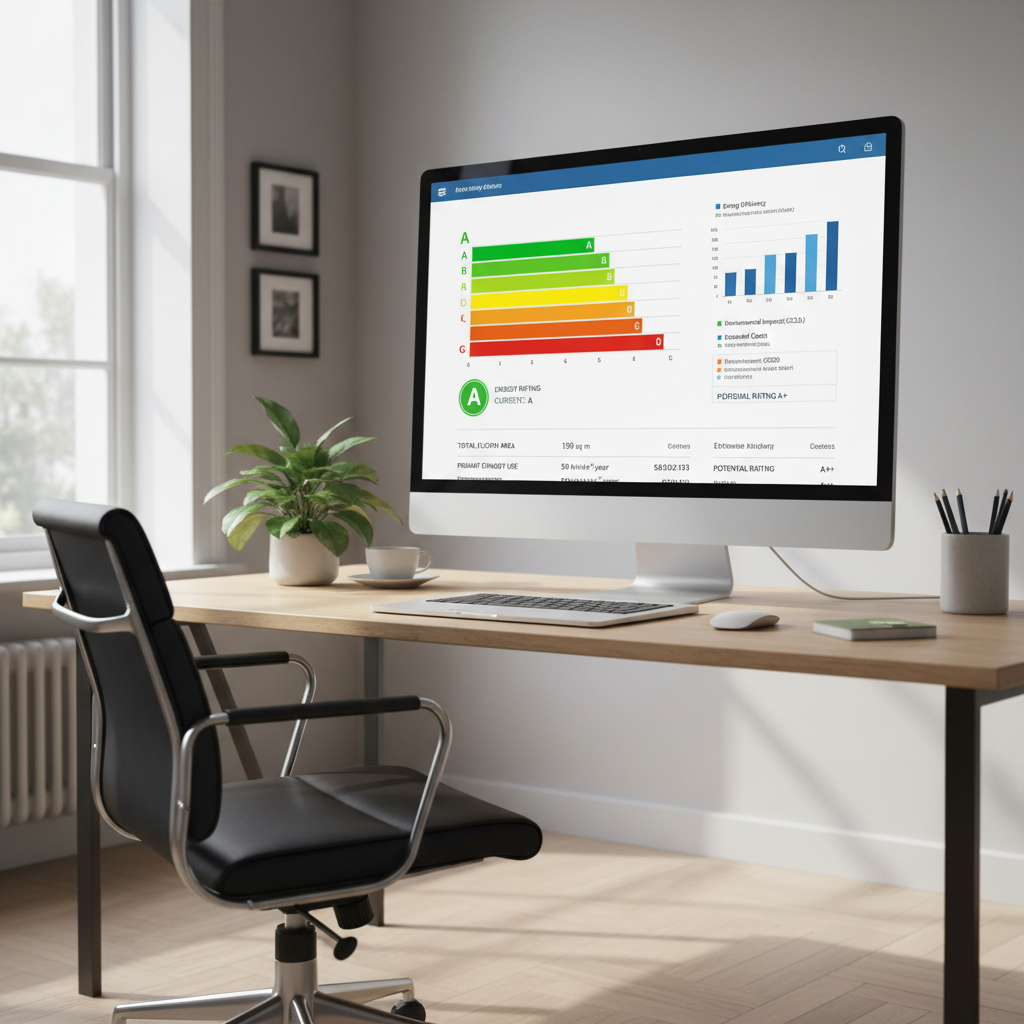
EPC Ratings & Property Values: What the 2024 Data Really Shows
New data from Rightmove and DLUHC confirms A/B rated homes sell for up to 14% more than equivalent D/E properties. Here's what this means for buyers, sellers and landlords.
Why Your EPC Rating Is Now a Financial Asset
For years, an EPC was treated as a bureaucratic checkbox — something you got because you had to, filed away and forgot about. That's changing fast.
New research from Rightmove, DLUHC (Department for Levelling Up, Housing & Communities) and Zoopla paints a clear picture: your EPC rating has a measurable, material impact on what your property is worth and what it can earn.
The Numbers: Sale Price Premium
A 2024 DLUHC-commissioned study analysed over 300,000 transactions and found:
- A/B rated homes sold for 8–14% more than comparable D-rated homes in the same postcode
- The premium is most pronounced in the Midlands and North where housing stock is older
- Properties rated E or below took 23% longer to sell on average
For a £250,000 Birmingham terrace, that 14% premium translates to £35,000 in additional value.
The Rental Premium
Zoopla's Rental Market Report 2024 found that EPC C+ rated properties in the West Midlands achieve 8–10% higher monthly rents than F/G equivalents of the same size.
On a £950/month letting, that's an extra £76–£95 per month — or up to £1,140 per year, per property. For portfolio landlords, the compounding effect is enormous.
Green Mortgages: The Hidden Advantage
This is the piece most landlords and homeowners are missing. Major UK lenders — including Barclays, NatWest, Halifax and Nationwide — now offer preferential rates for EPC A–C rated properties.
Typically 0.10–0.20% below their standard rates, this might sound small. But on a £250,000 repayment mortgage over a 5-year fix, a 0.15% rate reduction saves approximately £1,800 in interest payments.
For buyers, this means a C-rated property can be genuinely cheaper to buy than a D-rated one — even if the purchase price is slightly higher.
What This Means for Birmingham Homeowners
Birmingham has a higher proportion of pre-1980 housing stock than the national average, meaning a larger share of properties fall in the D–G range. This represents both a challenge and a significant opportunity.
The areas with the highest potential uplift from improvement include:
- Erdington and Moseley — high density of older terraced stock
- Handsworth and Aston — significant pre-war housing
- Selly Oak and Stirchley — strong rental demand means improvements are quickly recouped
The First Step
You can't improve what you don't measure. A current EPC gives you a baseline, identifies the most impactful improvements, and flags grant eligibility.
Our DEA-qualified assessors cover all Birmingham postcodes with 24-hour certificate turnaround from £65.
Ready to take action?
Get a fast, no-obligation quote from our accredited team — covering EPCs, surveys, retrofit and more.
Related Articles
EPC C Deadline: Why Your Rating Impacts Property Value
Discover how the 2030 EPC C deadline is reshaping West Midlands property values and why energy efficiency is now a critical asset-management strategy.
EPC C by 2030: A Landlord’s Action Plan for the West Midlands
Prepare your rental portfolio for the 2030 EPC C deadline. Learn how to navigate the £10,000 cost cap, new methodology shifts, and West Midlands grant support.