Awaab’s Law Compliance: A West Midlands Landlord Evidence Guide
Master Awaab’s Law and Decent Homes compliance in the West Midlands. Learn how to document damp, mould, and ventilation to protect your rental investment in 2026.
Awaab’s Law Compliance: A West Midlands Landlord Evidence Guide
For decades, the conversation around damp and mould in rental properties often devolved into a 'blame game' between landlords and tenants. Landlords frequently cited 'lifestyle choices'—such as drying clothes on radiators or failing to open windows—while tenants pointed to structural disrepair. In 2026, that ambiguity has been legally erased. With the full implementation of the Renters’ Rights Act and the extension of Awaab’s Law to the private rented sector (PRS), the burden of proof has shifted decisively onto the property owner.
In Birmingham, Coventry, and across the Black Country, where a significant portion of the rental stock consists of pre-war terraces and aging conversions, the risk of damp and mould is inherently higher. Meeting the new Decent Homes Standard is no longer just about aesthetics; it is a strict legal requirement backed by mandatory investigation timelines and heavy financial penalties. This guide explores how West Midlands landlords must adapt their property condition documentation to survive this new regulatory landscape.
The New Legal Reality: Awaab’s Law in 2026
Originally designed for the social housing sector following the tragic death of Awaab Ishak, the principles of Awaab’s Law now apply to all residential tenancies in England via the Renters' Rights Act 2025. The law mandates that landlords must adhere to strict timeframes when a hazard—specifically damp and mould—is reported.
Mandatory Response Timelines
According to current government guidance, landlords must follow a rigid schedule once a potential hazard is identified:
- Investigation (14 Days): Within 14 calendar days of a hazard being reported, the landlord must conduct a thorough investigation and provide the tenant with a written report of the findings.
- Repair Commencement (7 Days): If the investigation identifies a 'significant' hazard, the landlord must begin repair works within 7 days of the report being issued.
- Emergency Repairs (24 Hours): If the hazard poses an imminent risk to health or safety, repairs must be actioned within 24 hours.
- Completion: Works must be completed within a 'reasonable' timeframe, and the tenant must be provided with a summary of the completed works.
Failure to meet these deadlines allows tenants to take legal action for breach of contract through the courts. In the West Midlands, where local authorities like Birmingham City Council have increased their enforcement teams, the risk of a £30,000 civil penalty for non-compliance is a very real threat to portfolio viability.
The Decent Homes Standard: Beyond the Basics
The extension of the Decent Homes Standard to the private sector means that properties must now meet four key criteria to be considered 'fit for human habitation':
- Criterion A: It must meet the current statutory minimum standard for housing (free from Category 1 hazards under the HHSRS).
- Criterion B: It must be in a reasonable state of repair.
- Criterion C: It must have reasonably modern facilities and services.
- Criterion D: It must provide a reasonable degree of thermal comfort.
For landlords in Wolverhampton, Walsall, and Dudley, Criterion D is often the stumbling block. Thermal comfort is inextricably linked to energy efficiency and ventilation. A property with a poor EPC rating is significantly more likely to suffer from condensation-led damp, which under Awaab's Law, is now the landlord's responsibility to mitigate through structural or mechanical improvements rather than just tenant advice.
The Evidence Gap: Why Standard Inventories Are No Longer Enough
Historically, a property inventory was a simple list of furniture and a note that the walls were 'white and clean.' In the era of Awaab’s Law, this is insufficient. To defend against claims of negligence or to prove that a hazard was investigated within the 14-day window, landlords need a 'compliance-first' documentation strategy.
1. The Technical Baseline
Before a tenancy begins, you must establish the baseline condition of the property’s moisture management systems. This includes:
- Ventilation Testing: Documenting the presence and functionality of extractor fans in 'wet rooms' (kitchens and bathrooms). Are they humidistat-controlled? What is their extraction rate?
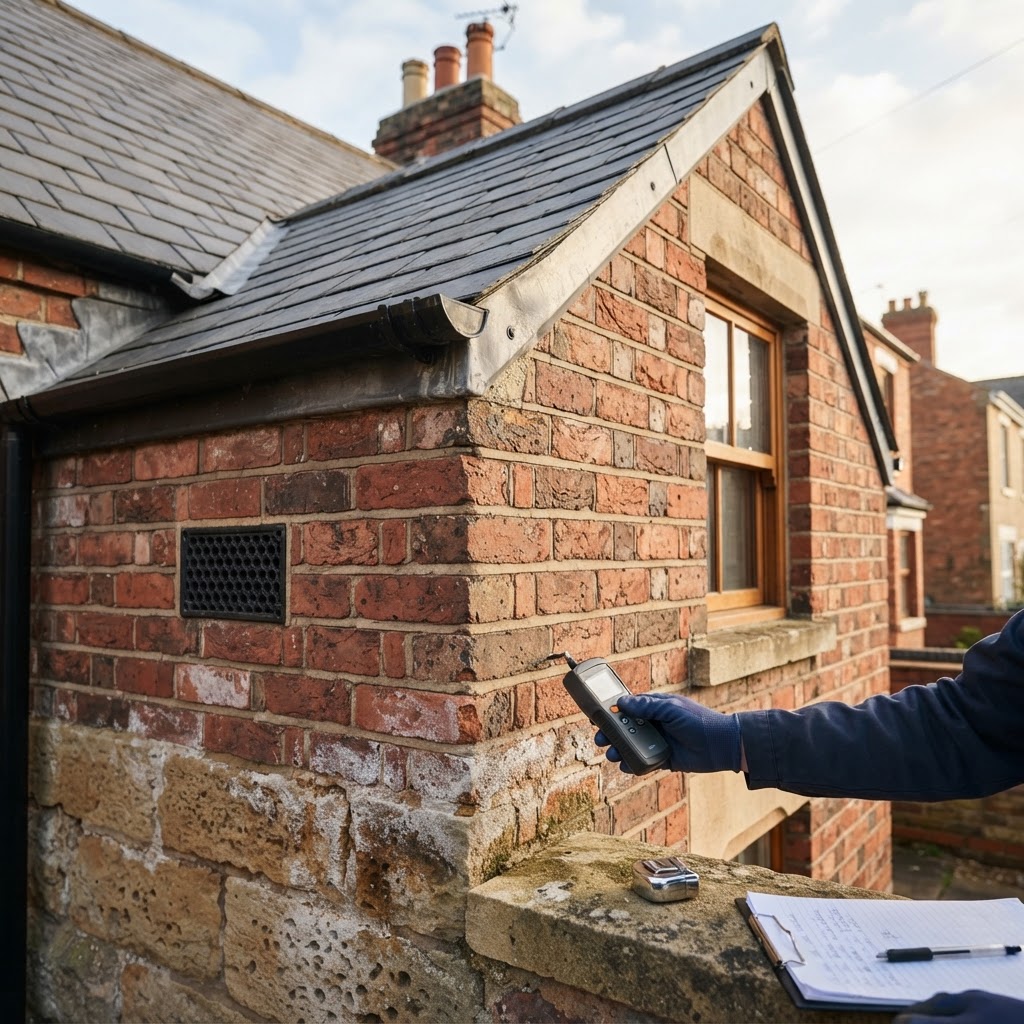
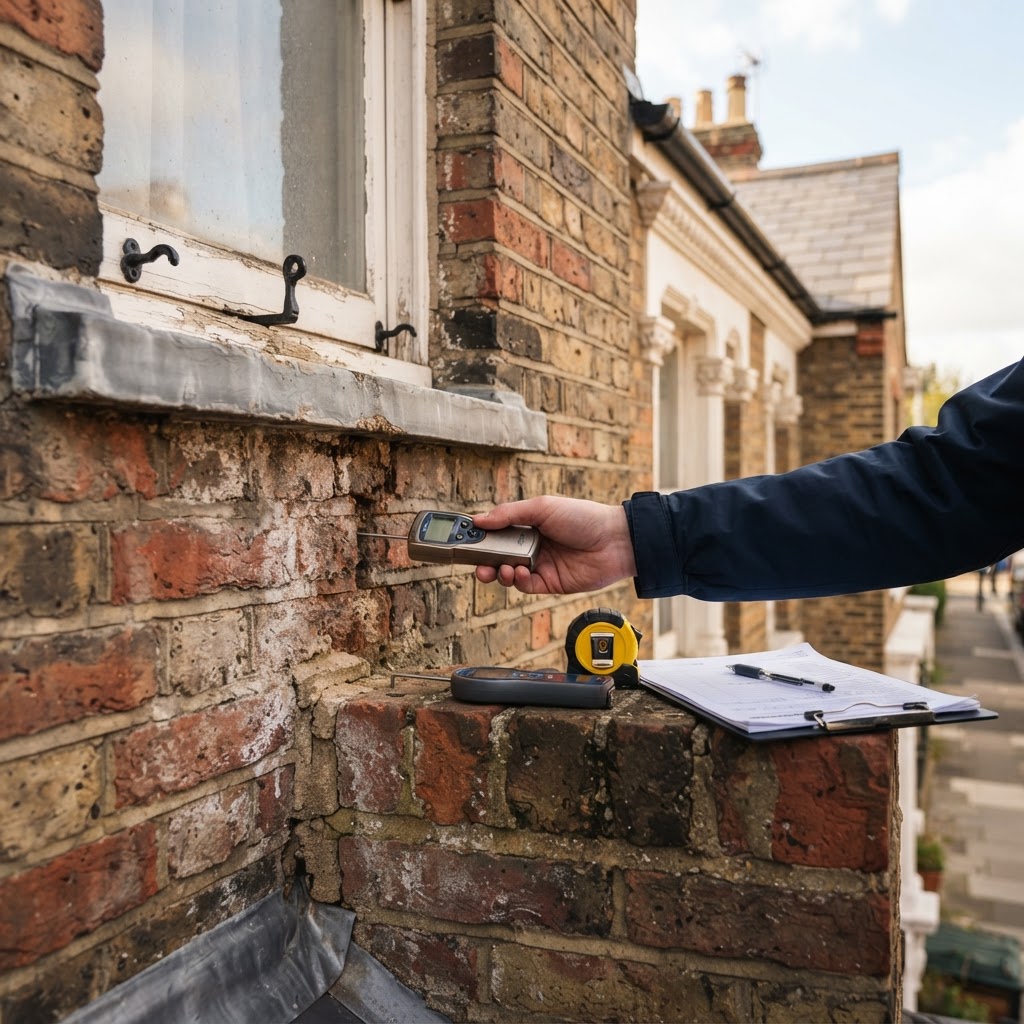
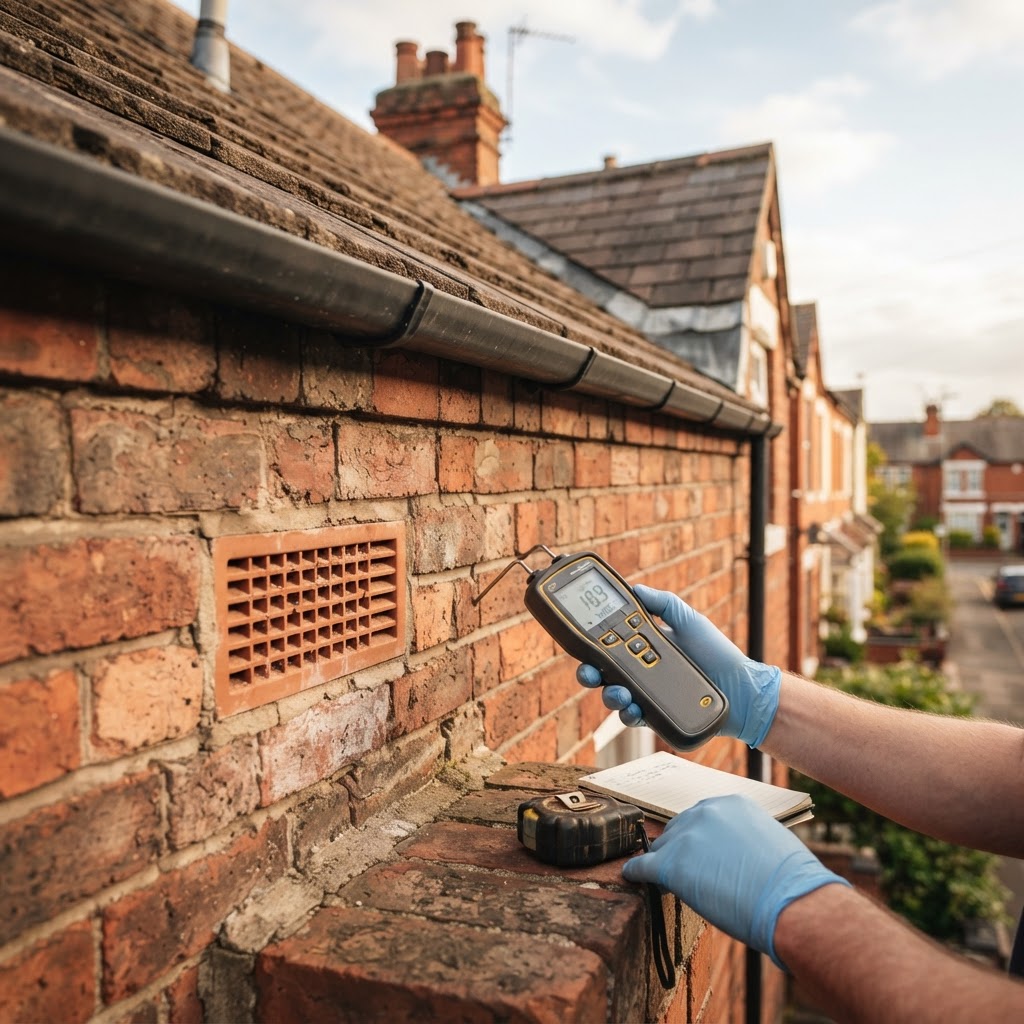
- Moisture Readings: Using a professional damp meter to record baseline moisture levels in walls prone to cold bridging, particularly in older solid-wall properties common in Stafford and Solihull.
- Damp Proof Course (DPC) Evidence: Recording the location and visible condition of the DPC. As Citizens Advice notes, if a failing DPC is the cause of damp, the landlord is always liable.
2. The 14-Day Investigation Report
When a tenant reports mould, the clock starts. Your investigation report must be professional and evidence-based. It should include:
- High-resolution, date-stamped photographs of the affected area.
- An assessment of the likely cause (e.g., penetrating damp, rising damp, or condensation).
- A review of the property’s insulation and heating systems.
- A clear action plan with dates for remedial work.
Using a professional mid-term inspection service during this window ensures that the report is impartial and legally robust.
360° Digital Evidence: The Gold Standard for 2026
In a legal dispute, a 'he-said-she-said' argument regarding when mould first appeared is a losing battle for the landlord. This is where 360° virtual tours and digital twin technology become invaluable.
By creating a complete digital record of the property at the check-in stage, you capture every corner, ceiling, and cupboard interior in high definition. If a tenant claims six months later that a room was 'mouldy from day one,' the digital twin provides irrefutable, time-stamped evidence of the property’s true condition.
At Skyline Technical Services, our ThreeSixty Inventory approach allows landlords to 'walk through' the property retrospectively. This level of detail is particularly crucial for West Midlands landlords managing older stock, where subtle signs of moisture ingress can be missed in traditional 2D photography.
Local Challenges: The West Midlands Housing Stock
The West Midlands presents unique challenges for property condition management.
- Birmingham and the Black Country: The prevalence of Victorian and Edwardian brickwork means many properties lack cavity wall insulation. These 'cold' walls are magnets for condensation. Landlords here should consider retrofit assessments to identify where internal wall insulation or improved ventilation could prevent Awaab’s Law hazards before they arise.
- Stafford and West Staffordshire: In more rural or suburban areas, older properties may rely on outdated heating systems. Under the Decent Homes Standard, 'thermal comfort' requires efficient, controllable heating. Upgrading to modern heat pumps or high-heat retention storage heaters—often funded via the Warm Homes Grant—is a proactive way to ensure compliance.
How Skyline Technical Services Can Help
Navigating the intersection of Awaab’s Law, the Decent Homes Standard, and the Renters’ Rights Act requires a professional approach to property data. Skyline Technical Services provides the technical expertise West Midlands landlords need to stay compliant and protected.
- ThreeSixty Inventories: We provide ultra-high-definition 360° documentation that serves as your primary legal defence in condition disputes. Learn more about our inventory services.
- LetCompliant Audits: Our comprehensive compliance checks ensure your property meets the Decent Homes Standard, covering everything from EICRs and Gas Safety to ventilation and moisture risk. View our compliance packages.
- Retrofit & PAS 2035 Assessments: If your property is struggling with thermal comfort or recurring damp, our retrofit assessors can provide a roadmap to EPC C and a mould-free environment. Book a retrofit assessment.
- RICS Level 2 & 3 Surveys: For landlords looking to expand their portfolios, our RICS-accredited surveys identify structural damp issues before you commit to a purchase. Explore our RICS survey packs.
FAQ: Awaab’s Law and Property Condition
Q: Does Awaab’s Law apply if the tenant doesn't report the mould? A: The 14-day timeline begins when the landlord 'becomes aware' of the hazard. This could be via a tenant report, a mid-term inspection, or even a report from a contractor. Proactive monitoring is essential.
Q: Can I still claim 'lifestyle' causes for damp? A: Under the new standards, you cannot simply blame the tenant. You must first prove that the property provides adequate facilities for the tenant to live normally (e.g., sufficient ventilation for cooking and bathing, and affordable heating). If the property is under-ventilated, the cause is legally considered structural.
Q: What is the 'significant hazard' threshold? A: This is determined by the Housing Health and Safety Rating System (HHSRS). Any mould growth that could impact respiratory health—especially for children, the elderly, or those with pre-existing conditions—is likely to be classified as a significant hazard.
Q: How does the Renters' Rights Act change my inventory process? A: From May 2026, the mandatory Property Portal will likely require evidence of compliance with the Decent Homes Standard. A professional, digital-first inventory is the most efficient way to upload and manage this evidence. Check our pricing for digital inventories.
Q: Are there grants available for damp remediation in Birmingham? A: Yes. The Warm Homes: Local Grant and ECO4 schemes can often fund ventilation improvements, insulation, and heating upgrades that directly address the root causes of damp. Use our grant checker to see if your property qualifies.
Protect your investment and your tenants by moving to a professional, evidence-based management model today. Contact Skyline Technical Services to secure your property’s future.
Ready to take action?
Get a fast, no-obligation quote from our accredited team — covering EPCs, surveys, retrofit and more.