PRS Database Registration: The Complete West Midlands Landlord Guide
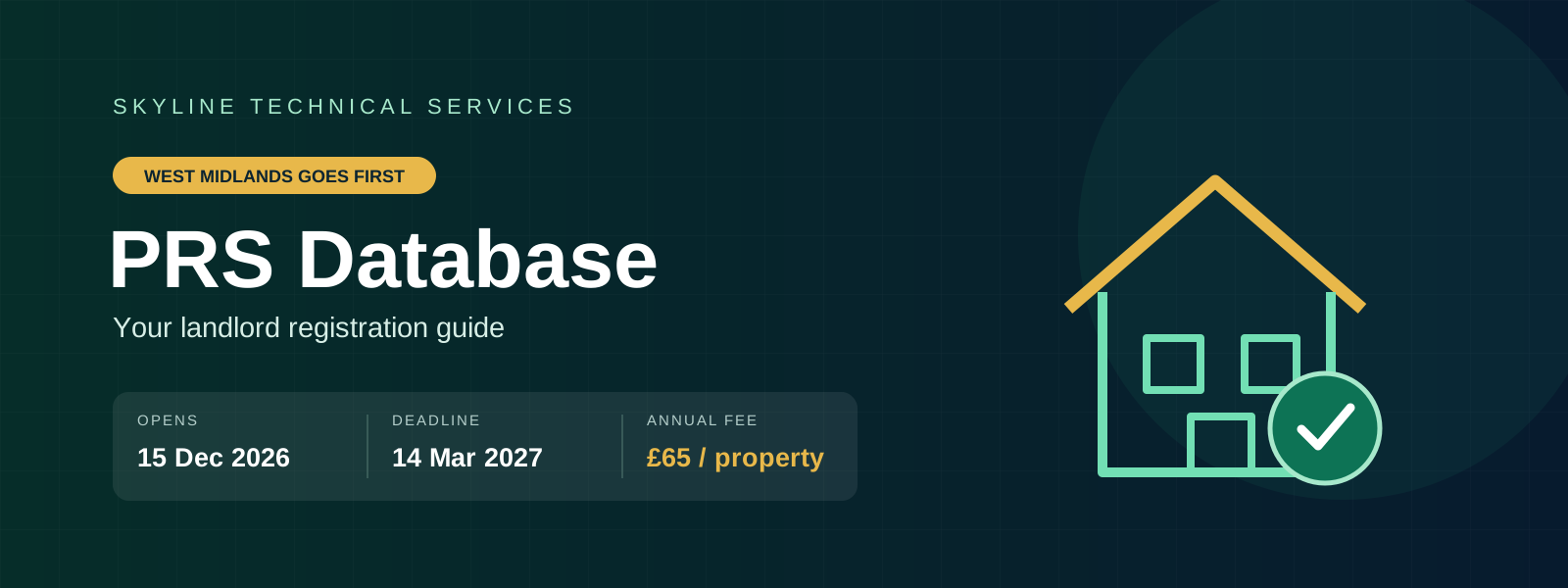
West Midlands landlords go first. Understand the 15 December 2026 launch, 14 March 2027 deadline, £65 annual fee, required records and your agent’s role.
Fact-checked: 12 October 2026. This guide covers England.
The new Private Rented Sector (PRS) Database now has a confirmed public-facing name: Register your rental property. For West Midlands landlords, this is a near-term job to prepare for, rather than a distant proposal.
The government has announced a regional rollout starting on 15 December 2026. Rental properties in the West Midlands must be registered by 14 March 2027, and the standard registration fee is £65 per property, per year.
The essentials: West Midlands first; £65 annually for each property; landlords start and finish registration themselves; agents may provide certain information. The initial rollout covers properties already let or becoming let during rollout. Registration of empty properties before advertising, and registration numbers on adverts, are later requirements under future legislation.
These dates and distinctions come from the government’s registration guidance, supported by its 9 September announcement. This article separates those confirmed arrangements from practical preparation advice.
What is the PRS Database?
The PRS Database is England’s new national system for identifying private landlords and the homes they let. It forms part of the Renters’ Rights Act 2025 reforms.
Its purposes are to give landlords clearer information about their responsibilities, help councils identify and address poor practice, and eventually give tenants access to useful information about a property and its landlord.
You may see the terms landlord database, landlord register, rental property register or the older Property Portal. In this context, the official service to look for is Register your rental property.
A registration entry and an organised property evidence file do different jobs. The entry records required information in the government service. Your evidence file supports the accuracy of that information and the ongoing management of the property.
PRS registration dates: West Midlands first
The timetable follows where the rental property is located, rather than where its landlord lives. A landlord living in London with a rented house in Birmingham must meet the West Midlands deadline.
| Property’s region | Registration requirement begins | Deadline to register |
|---|---|---|
| West Midlands | 15 December 2026 | 14 March 2027 |
| East of England | 15 January 2027 | 14 April 2027 |
| East Midlands | 15 February 2027 | 14 May 2027 |
| South East | 15 March 2027 | 14 June 2027 |
| Yorkshire and Humber | 15 April 2027 | 14 July 2027 |
| North West | 15 May 2027 | 14 August 2027 |
| North East | 15 June 2027 | 14 September 2027 |
| London | 15 July 2027 | 14 October 2027 |
| South West | 15 August 2027 | 14 November 2027 |
Source: MHCLG Housing Hub regional registration timetable.
For Skyline’s customers in Birmingham, Sutton Coldfield, Coventry, Solihull, Wolverhampton, Walsall, Dudley and Sandwell, the first registration window is particularly relevant. Landlords with homes in Staffordshire, including Lichfield, Cannock, Rugeley and Tamworth, should also prepare for the West Midlands regional window.
The government says landlords can register properties in different regions together from 15 December 2026 if they wish. Each property must still meet its own region’s deadline.
Who needs to register, and what about empty properties?
The published guidance says landlords of assured or regulated tenancies must register themselves and each relevant property. The first phase applies to properties currently let, or becoming let during the rollout period.
One express exclusion is supported exempt accommodation as defined in section 12 of the Supported Housing (Regulatory Oversight) Act 2023. Landlords with specialist accommodation or unusual tenancy arrangements should check the official scope rather than assume ordinary residential rules apply.
There is a separate future stage: the government intends to require registration of unoccupied homes before they are marketed for let, with unique landlord and property identifiers included in advertising. Its guidance says this depends on future legislation and that further details will follow.
As at 12 October 2026, the service has not launched. The announced starting date is 15 December. Use official government guidance for access details when it opens, and keep that later advertising requirement separate from the initial registration window.
How much does PRS registration cost?
The government has confirmed an annual £65 fee for each property, with registration renewed each year. It also says fees will be pro-rated during rollout so early registrants do not pay more.
At the standard annual rate, the portfolio arithmetic is:
| Number of rental properties | Standard annual registration cost |
|---|---|
| 1 | £65 |
| 3 | £195 |
| 5 | £325 |
| 10 | £650 |
These are simple illustrations of the standard fee, before any rollout pro-rating. The government fee should be distinguished from any separately agreed charge for document preparation, property inspections or agent support.
What information will landlords need?
The government has published a detailed information list. Prepare from that list, while checking the eventual live guidance for the precise submission process.
Individual and organisational landlord details
Individual landlords will need identifying and contact information, including their name, date of birth, residential address, phone number and email.
Organisational landlords have a different information set. It includes the organisation’s name, legal form, address and contacts; details of the person making the entry and the nominated contact; and company or charity registration details where applicable. Additional information applies to some organisations and trusts.
Where someone acts under a power of attorney, probate or another specified legal authority, evidence of that authority is also required. These are situations to review carefully against the full official list, rather than reduce to a generic landlord form.
Property, ownership and management details
Gather the full dwelling address, ownership and dwelling type, bedroom count, current letting status and the relevant landlord correspondence details.
The published list also asks for information about the freeholder, superior landlord and property manager where relevant. For a leasehold flat, that means checking who holds each role instead of assuming the managing agent and freeholder are the same organisation.
A useful first task is to compare the address on every certificate with the address used in your tenancy and management records. “Flat 4”, “Apartment 4” and a building name can easily end up as three apparently different records.
Occupancy, licensing and rent details
Prepare the number of occupants and households, whether the property is furnished, partly furnished or unfurnished, and whether mandatory HMO, additional or selective licensing applies. Where available, have the relevant licence numbers ready.
Record the rent, its payment frequency and any utilities included. Keep your records current: an old advertised rent or a previous tenancy’s occupancy figure may no longer describe the home being registered.
Safety and energy documentation
The government’s published information list includes the following:
| Record | Information to prepare |
|---|---|
| Gas safety | Where there is a gas supply, a copy of the gas safety record if one exists, plus its issue date |
| Electrical safety | The EICR if one exists, or an appropriate Electrical Installation Certificate, plus the relevant expiry date |
| EPC | Whether a valid EPC had to be supplied to the current tenant, and the most recent certificate if one exists |
| Expired EPC | The current tenancy’s start date where the most recent EPC is no longer valid |
| MEES exemption | Whether a below-minimum-rated property has a registered exemption, and the applicable exemption type |
Source: government dwelling and health-and-safety information requirements.
The phrase “if one exists” describes information collected by the database. It does not waive separate safety or energy-efficiency duties. A missing certificate should trigger a review of the actual obligation, not a guess that an empty upload field resolves the issue.
Can a letting agent register for a landlord?
The government says landlords are responsible for starting and ending the registration process. An agent or property manager may supply certain information on the landlord’s behalf, with more guidance due before launch.
The landlord remains responsible for providing all required information. A practical division of work is therefore:
- Landlord: prepare the GOV.UK One Login and landlord identity information, initiate registration and complete the required process.
- Agent or manager: organise agreed property, tenancy, licensing and certificate information; use the authorised support route when guidance is available.
- Both: agree who monitors renewals, corrects changes and checks completion.
For agents managing a portfolio, begin with a short landlord instruction explaining the dates, fee and landlord’s own role. Then build a property list showing “documents ready”, “landlord action required” or “registered”. Those statuses are more useful than one broad “compliant” label.
Does registration replace EPCs, licensing or the Ombudsman?
It does not replace the underlying duties. Local licensing, safety requirements, tenancy records and the national registration service remain distinct parts of property management.
The PRS Exemptions Register used for energy-efficiency exemptions is also a different service. Registering a property on the new landlord database is not the same as registering a valid MEES exemption.
The existing domestic MEES guidance generally requires EPC E or above for covered rented properties unless a valid exemption applies. The higher EPC standard planned for 2030 is a separate reform; database registration in December 2026 does not make EPC C an immediate requirement. See the current government MEES guidance.
The planned Private Rented Sector Landlord Ombudsman is separate again. The House of Commons Library’s 9 October 2026 briefing says it is expected to be ready in 2028, after the database.
What will tenants be able to see, and what are the penalties?
The government intends a public interface that helps tenants make informed decisions. However, the exact public information list is still to be published. It expressly recognises the need to balance tenant information with landlord privacy.
Do not assume every certificate, personal address or identity detail will be available to everyone. Equally, prepare accurate records on the basis that councils will use the service to support enforcement.
The government’s Renters’ Rights Act guide describes civil penalties of up to £7,000 for failing to meet database requirements, with up to £40,000 or criminal prosecution for serious or repeated breaches, including fraudulent information. These are maximum enforcement outcomes, rather than an automatic £40,000 charge for every late registration.
The practical response is to meet the applicable deadline, provide accurate information and keep evidence of completion. If a property has a disputed legal position, take advice on that specific issue.
A simple PRS-ready property checklist
Think in two layers: information for registration and evidence for ongoing property management. Both matter, but they are not the same upload checklist.
Layer 1: Registration information
- Confirm the property’s region and deadline.
- Identify the correct individual or organisational landlord.
- Prepare the landlord’s GOV.UK One Login.
- Match the full address across certificates and tenancy records.
- Check property type, ownership, bedrooms and letting status.
- Confirm occupancy, households, furnishing and rent.
- Check whether local licensing applies.
- Gather the applicable gas, electrical and EPC information.
- Agree the agent’s role and who checks registration is finished.
- Budget for the annual fee and record the renewal responsibility.
Layer 2: Your working evidence file
Keep the opening inventory, mid-term reports, tenant-reported defects, repair instructions, access attempts, invoices and completion photographs linked to the property.
These are recommended management records. The published database information list does not say every inventory, inspection photograph or maintenance log must be uploaded.
For example, if a mid-term inspection identifies a loose electrical fitting, the useful sequence is: record it, assess the appropriate response, instruct a qualified contractor, receive completion evidence and update the record. A photograph alone cannot demonstrate that work was completed.
A property passport or compliance dashboard helps when it points to actual documents and completed actions.
A practical 30-day preparation plan
Week 1 — Build the property list. Confirm addresses, landlord entities, regions and licensing responsibilities. Separate occupied properties from genuinely vacant homes.
Week 2 — Review documents. Check which certificates belong to which home, read the outcomes and identify outstanding actions. Request missing copies before arranging unnecessary replacement assessments.
Week 3 — Close the gaps. Arrange genuinely needed inspections or certificates, chase remedial evidence and confirm tenant information. Prioritise safety issues on their own merits rather than waiting for the registration date.
Week 4 — Prepare the handover. Agree who supplies each piece of information, keep the landlord’s own registration role clear and create a completion-and-renewal tracker.
For a portfolio spanning regions, use one consistent evidence structure with separate deadline fields. That makes the same process reusable when the next registration window arrives.
How Skyline can help West Midlands landlords
Skyline Technical Services helps landlords and letting agents organise the property evidence behind their decisions: domestic EPC assessments, inventories and check-out reports, periodic inspections and practical landlord compliance support.
Our Three Sixty Inventory reporting records condition and photographic evidence. LetCompliant brings property records, certificates, due dates and follow-up history together. That can support preparation and ongoing management; it is separate from the government registration service.
For a single home, start by checking what you already hold. For several homes, request a portfolio enquiry and tell us the property areas, number of properties and the records you need help organising. You can book an EPC or inspection online.
Registration itself remains the landlord’s responsibility, using the official service. We can help with records and the property services within our scope, while specialist legal questions should go to an appropriately qualified adviser.
Official sources and review date
This guide was checked on 12 October 2026 using:
- MHCLG Housing Hub: Get ready to register your rental property — deadlines, fees, scope, information fields and agent responsibilities.
- MHCLG announcement, 9 September 2026 — rollout and later advertising requirements.
- House of Commons Library briefing, updated 9 October 2026 — reform stages and the separate Ombudsman timetable.
- Government guide to the Renters’ Rights Act — database purpose and enforcement.
- Current domestic MEES guidance — existing energy-efficiency requirements.
Further agent guidance, public-interface details and later legislation may change how the service operates. Check the live official guidance before submitting an entry. This is general property-services guidance, not advice on a particular tenancy dispute.
FAQs: PRS Database registration
When must West Midlands landlords register?
The announced West Midlands registration window begins on 15 December 2026 and closes on 14 March 2027. The deadline follows the rental property’s location, not the landlord’s home address.
Is the £65 PRS fee per landlord or per property?
It is £65 per property per year, with annual renewal. The government says fees will be pro-rated during rollout so early registrants do not pay more.
Can my letting agent do the whole registration for me?
Landlords must start and end registration themselves. Agents or property managers may provide certain information through the authorised process, but the landlord remains responsible for all required information.
Must I register an empty property before advertising it now?
The initial rollout concerns currently let properties and those becoming let during rollout. Registration of empty homes before marketing, and registration numbers on adverts, are later requirements under future legislation. Await the relevant guidance.
What certificates should I prepare?
Prepare the applicable gas safety record, EICR or appropriate EIC, and EPC information, including relevant dates and MEES exemption details. The official information list addresses cases such as an expired EPC during an existing tenancy.
Do I have to upload inventories and all inspection photographs?
Those are useful ongoing management records, but the published registration information list does not require every inventory, mid-term report or photograph to be uploaded. Keep registration requirements and your wider evidence file clearly identified.
Does PRS registration replace a council property licence?
No. Selective, additional and mandatory HMO licensing remain separate requirements where applicable. Check the relevant council’s rules and have the licence details ready.
Does this landlord database cover the whole UK?
This service and the regional timetable in this guide apply to England. Wales, Scotland and Northern Ireland have their own rental frameworks; do not apply England’s dates to properties elsewhere.
Ready to take action?
Get a fast, no-obligation quote for EPCs, inventories, inspections and property-record support across the Midlands.
Related Articles

Are letting-agent fees rising after the Renters’ Rights Act?
Reports suggest some landlords face new letting-agent charges after the Renters’ Rights Act. See what is confirmed, what is reported and what to check.

Private Rented Sector Database: Records to Prepare
Updated October 2026: organise the landlord and property records behind PRS registration, with confirmed dates and fees linked to our complete guide.