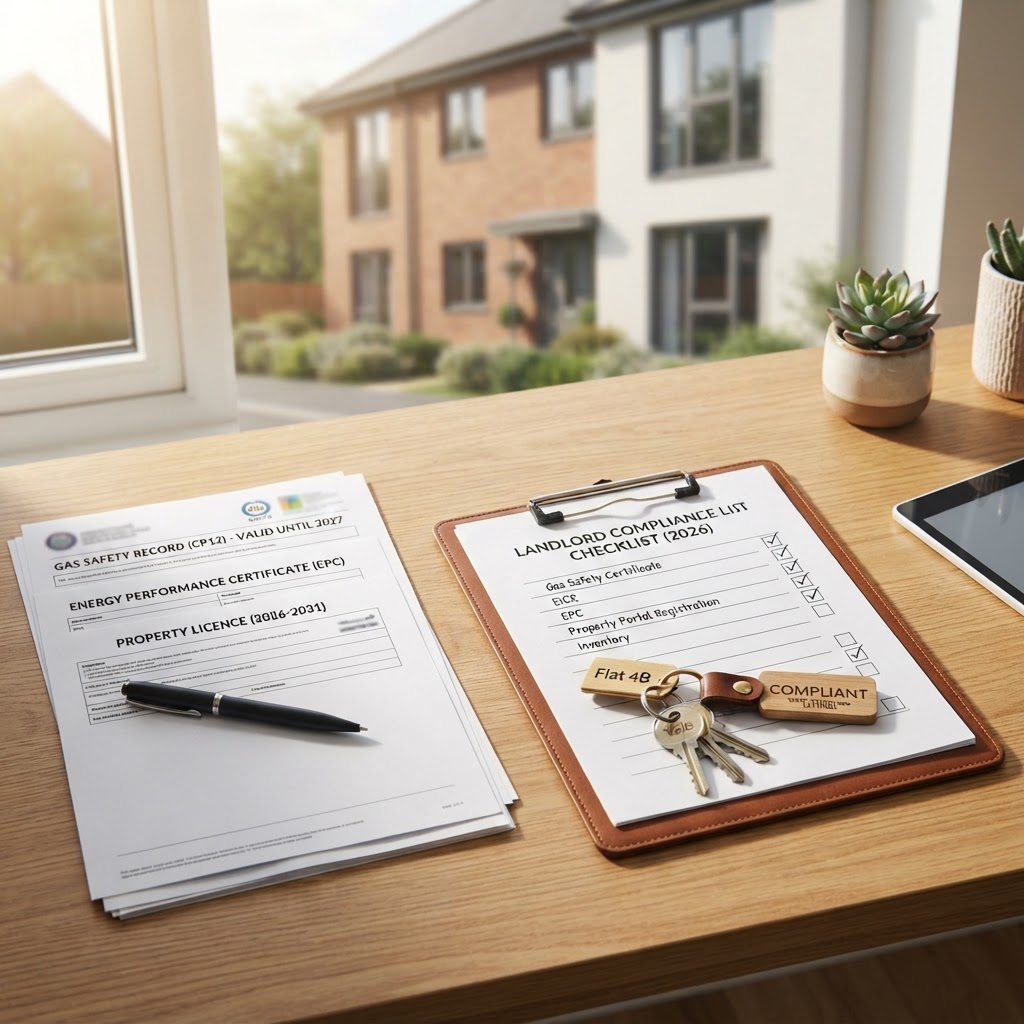
Private Rented Sector Database: Records to Prepare
The Private Rented Sector Database is planned from late 2026. Here are the property and compliance records landlords should organise now.
England’s new Private Rented Sector Database is intended to bring important information about landlords and rented properties into one national system.
The government’s Renters’ Rights implementation roadmap places the database in phase two, beginning from late 2026. Its purpose is to help landlords understand and demonstrate compliance, give tenants better information and help councils target enforcement.
Final operational details can still change during rollout. Landlords do not need to invent information or upload documents to an unofficial service. They can, however, organise their property records now so registration does not become a last-minute search through inboxes, paper files and contractor messages.
What is the Private Rented Sector Database?
The database is a national register created under the rental reforms. Government guidance says it will bring together key information for landlords, tenants and councils.
The planned system is expected to:
- Identify landlords and privately rented properties.
- Help landlords understand their obligations.
- Allow landlords to demonstrate compliance.
- Give tenants information when making rental decisions.
- Support local-authority enforcement.
Read the official Renters’ Rights implementation roadmap.
Is registration already open?
The national database is planned for phased introduction from late 2026. The precise onboarding sequence, fields, fees and renewal process should be checked against current government guidance when registration opens.
Be cautious with articles that present every proposed field as confirmed. The sensible preparation is to organise records that a responsible landlord already needs, not to guess the final form.
The landlord records worth organising now
1. Property identity and ownership details
Create one accurate master record for each rental property containing:
- Full postal address.
- Postcode and local authority.
- Property type and number of bedrooms.
- Landlord’s legal name and correspondence details.
- Managing-agent details where applicable.
- Ownership or management reference.
- Tenancy status.
- Any relevant licensing scheme and licence number.
Check that the address format is consistent across certificates. Small differences such as flat numbering or missing building names can cause confusion when matching documents.
2. Energy Performance Certificate
Store:
- Current EPC certificate or official register link.
- Assessment date.
- Expiry date.
- Current rating.
- Assessor details.
- Any improvement or exemption records relevant to the property.
The database rollout and the future energy-efficiency standard are separate policies. Do not assume database registration automatically proves compliance with Minimum Energy Efficiency Standards.
Skyline provides domestic EPC assessments across Birmingham and the wider West Midlands.
3. Gas safety records
For properties with relevant gas appliances, retain:
- Current gas safety record.
- Inspection date and next due date.
- Engineer and Gas Safe registration details.
- Evidence the record was supplied to the tenant.
- Repairs or follow-up work arising from the inspection.
Keep the newest valid record easy to identify while preserving historic records.
4. Electrical safety documentation
Store the current Electrical Installation Condition Report and any written confirmation that remedial work has been completed.
A good record includes:
- Inspection and report dates.
- Outcome and classification codes.
- Due date for the next inspection.
- Contractor details.
- Remedial quotations, invoices and completion evidence.
- Evidence supplied to the tenant where required.
5. Smoke and carbon-monoxide alarm evidence
A certificate list alone does not show the day-to-day condition of the property. Keep a dated record of alarm provision and checks at relevant tenancy stages.
Useful evidence includes:
- Alarm type and location.
- Check-in test or observation.
- Photographs.
- Reported faults.
- Repair or replacement records.
6. Tenancy documents
Keep the current tenancy information together:
- Written tenancy terms.
- Required government information supplied to the tenant.
- Deposit protection details and prescribed information.
- Rent and payment records.
- Tenant and emergency contact information.
- Key and access-device schedule.
- Relevant notices and delivery evidence.
Personal data should be stored securely and only for a legitimate purpose.
7. Property condition records
The database should not be treated as a replacement for property management.
Maintain:
- Opening inventory and check-in.
- Mid-term inspection reports.
- Tenant-reported defects.
- Damp, mould and hazard investigations.
- Contractor jobs and completion records.
- Check-out comparison.
- Photographic and 360° evidence where used.
These records help demonstrate what happened at the property between certificate dates.
8. Repair and maintenance audit trail
Create a simple log containing:
| Field | What to record | |---|---| | Date reported | When the issue first reached the landlord or agent | | Source | Tenant, inspection, contractor or other source | | Issue | Clear description and location | | Risk | Routine, priority, urgent or emergency | | Action | Inspection, contractor instruction or advice | | Access | Appointments and unsuccessful access attempts | | Completion | Date, invoice and photographs | | Follow-up | Reinspection or tenant confirmation |
The purpose is not paperwork for its own sake. It is to stop important action disappearing between emails and phone calls.
Build a property compliance register
A compliance register is a one-page summary that points to the full evidence.
For each property, show:
- Document name.
- Current status.
- Issue date.
- Expiry or review date.
- Responsible person.
- Link to the source record.
- Outstanding action.
Use simple status labels such as:
- Green: current and complete.
- Amber: renewal or action approaching.
- Red: expired, missing or unresolved.
A dashboard is useful only if the source documents behind it are accurate.
Common database-preparation mistakes
Uploading the wrong property’s certificate
Similar addresses, numbered flats and portfolio naming conventions create avoidable errors. Match the certificate address and property record before filing.
Keeping only the expiry date
An expiry date without the actual certificate or official link is not a complete record.
Mixing historic and current documents
Keep previous documents for the audit trail, but mark the current version clearly.
Treating “instructed” as “completed”
A contractor appointment is not completion evidence. Record the job as complete only when the work and supporting evidence have been received.
Ignoring local licensing
The national database does not remove selective, additional or mandatory HMO licensing requirements. Check the relevant council for each property.
Waiting for the registration deadline
Portfolio records take longer to clean than expected. Start with the properties that have missing, conflicting or nearly expired documents.
A 30-day preparation plan
Week 1: Build the property list
Confirm every address, landlord entity, managing agent and local authority.
Week 2: Audit certificates
Check EPCs, gas safety records, EICRs, licences and alarm evidence. Flag gaps and approaching renewals.
Week 3: Join up condition and maintenance records
Attach inventories, inspections, reported defects, works orders and completion evidence to the correct property.
Week 4: Review access and responsibility
Confirm who is responsible for each renewal, who can update records and how overdue actions will be escalated.
How Skyline Technical Services can help
Skyline’s landlord compliance service and software brings property details, certificates, inventories, inspections, tenant history and maintenance evidence into one connected record.
We can also provide:
- EPC assessments.
- Professional inventories.
- Check-ins and check-outs.
- Mid-term inspections.
- Property-condition reporting.
- Maintenance support.
- Portfolio inspection services.
For multiple properties, request a portfolio quote. Individual services can be booked online.
Frequently asked questions
When will the PRS Database launch?
The government roadmap places introduction in phase two from late 2026. Landlords should follow current GOV.UK guidance for the confirmed onboarding timetable.
Will every landlord have to register?
The reforms provide for a national system covering private landlords and properties. Exact exemptions and operational requirements should be checked when final registration guidance is published.
Does the database replace local licensing?
No. National registration and local licensing are separate. A property may still require a selective, additional or mandatory HMO licence.
What documents should I check first?
Start with time-sensitive compliance records: gas safety, EICR, EPC and any required property licence. Then connect those documents to tenancy, inspection and maintenance records.
Can an agent manage the records?
Agents may manage parts of the process, but landlords should confirm responsibilities in writing and retain visibility of the underlying evidence.
Ready to take action?
Get a fast, no-obligation quote from our accredited team — covering EPCs, surveys, retrofit and more.
Related Articles

Are letting-agent fees rising after the Renters’ Rights Act?
Reports suggest some landlords face new letting-agent charges after the Renters’ Rights Act. See what is confirmed, what is reported and what to check.
Damp and Mould Inspection Records for Landlords
Learn what a landlord damp and mould inspection record should contain, how to document action and why mid-term inspections support early intervention.