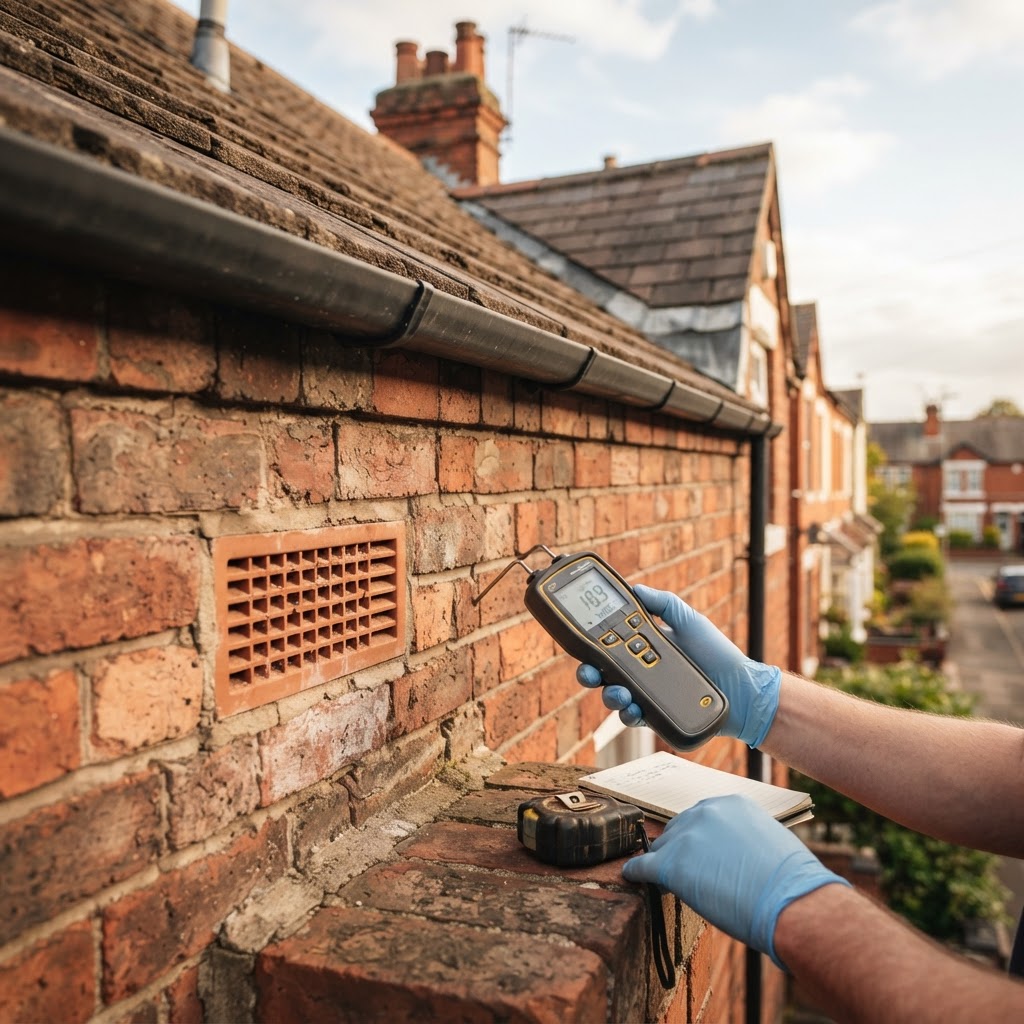
Damp and Mould Inspection Records for Landlords
Learn what a landlord damp and mould inspection record should contain, how to document action and why mid-term inspections support early intervention.
Damp and mould should never be reduced to a photograph and a note saying “tenant advised to ventilate.”
Condensation may contribute to moisture, but mould can also be linked to leaks, penetrating damp, cold surfaces, defective extraction, heating problems, blocked ventilation or building defects. A responsible response records the report, investigates possible causes, acts on hazards and checks whether the action worked.
This guide explains what landlords should include in a damp and mould inspection record and how periodic mid-term inspections can help identify problems earlier.
The current position for private landlords
Awaab’s Law currently sets fixed response times for social landlords. It should not be described as already applying those same statutory timescales to every private landlord.
Private landlords nevertheless have existing duties relating to property condition, repair and fitness. Government guidance says private and social landlords must comply with legal standards concerning damp and mould.
From 22 June 2026, councils in England can issue civil penalties of up to £7,000 where landlords fail to address serious hazards, including dangerous damp and mould.
Relevant official guidance:
- Understanding and addressing damp and mould health risks
- Government announcement on serious-hazard penalties
- New Decent Homes Standard policy statement
The practical standard is simple: take reports seriously, investigate the property and keep a reliable record of action.
Why a mid-term inspection matters
An inventory captures condition at the beginning. A check-out records the end. Damp and mould can develop between those points.
A professional mid-term inspection can:
- Identify staining, condensation and mould growth.
- Record leaks or defective seals.
- Check whether extract fans and vents are visibly present and unobstructed.
- Capture heating or ventilation concerns reported by the tenant.
- Identify furniture placed tightly against cold external walls.
- Create dated photographic evidence.
- Generate maintenance actions before the problem becomes more serious.
An inspection is not a specialist damp survey and should not pretend to provide a definitive diagnosis where the cause is uncertain. Its job is to observe, document, triage and recommend appropriate investigation.
What a damp and mould inspection record should contain
1. The original report
Record:
- Date and time received.
- Who reported the issue.
- Exact wording or summary.
- Location within the property.
- Photographs supplied by the tenant.
- Reported health or safety concerns.
- Any immediate advice or emergency action.
Do not lose the original email, message or call note once a job is raised.
2. Access and attendance
Include:
- Appointment offered.
- Inspection date and time.
- Who attended.
- Tenant or representative present.
- Rooms inspected.
- Areas not inspected and why.
- Failed access attempts and follow-up arrangements.
Access records should be factual and neutral.
3. Location and extent
Describe exactly where the issue appears.
For example:
Bedroom 2: localised black mould spotting to the upper external corner above the window, extending approximately 600 mm along the ceiling line.
This is more useful than “mould in bedroom.”
Record:
- Room and wall orientation where known.
- Approximate affected area.
- Height and position.
- Surface material.
- Whether the area is wet, stained, damaged or simply discoloured.
- Nearby windows, pipework, roof junctions or external walls.
- Whether possessions or furniture restrict inspection.
4. Photographic evidence
Take:
- A wide photograph showing the room.
- A medium-distance photograph showing location.
- Close-ups showing surface condition.
- Photographs of relevant nearby defects.
- Images of extractor fans, vents, windows or heating where relevant.
- Follow-up photographs after work.
Photographs should be dated and labelled. Avoid editing images in a way that changes the visible condition.
5. Moisture and environmental observations
Where suitable equipment and competence are available, record:
- Indoor temperature.
- Relative humidity.
- Surface or moisture-meter readings.
- Whether readings are indicative rather than conclusive.
- Weather conditions if relevant.
- Heating and ventilation observations.
A single moisture reading rarely proves the cause. Materials, salts, surface conditions and meter type can affect results. Use readings as part of the evidence, not as a substitute for building investigation.
6. Possible contributing factors
Record observations without jumping to blame.
Possible factors include:
- Plumbing or roof leaks.
- Defective gutters or rainwater goods.
- Failed external seals or pointing.
- Cold bridges.
- Insufficient or defective extraction.
- Blocked air bricks or vents.
- Inadequate heating.
- High internal moisture production.
- Furniture restricting air movement.
- Drying clothes indoors without adequate ventilation.
Several factors may be present at the same time.
7. Risk and urgency
Escalate immediately where there is:
- Extensive growth.
- A significant or continuing leak.
- Unsafe electrics near water.
- Structural deterioration.
- A vulnerable occupant reporting health effects.
- A bedroom or main living space becoming unsafe to use.
- Any other potential emergency hazard.
The person carrying out a routine inspection should have a clear route for reporting urgent findings.
8. Action plan
Every material observation should lead to a recorded decision.
An action plan may include:
- Emergency attendance.
- Plumber, roofer or drainage contractor.
- Ventilation or heating engineer.
- Building survey or specialist investigation.
- Cleaning and treatment after the moisture source is addressed.
- Replacement of damaged finishes.
- Tenant guidance alongside—not instead of—repairs.
- A follow-up inspection.
Record who is responsible and the target date.
Do not treat lifestyle as the default cause
Advice about heating, ventilation and moisture production can be useful, but it should follow a proper assessment.
Government damp-and-mould guidance warns against responses that fail to consider building condition and health risk. Simply telling a tenant to open windows can miss:
- Water penetration.
- Plumbing leaks.
- Inadequate fixed ventilation.
- Defective heating.
- Insulation gaps or cold bridging.
- Repair obligations.
A balanced record documents both property factors and relevant occupancy observations without making unsupported accusations.
The follow-up inspection
Closing a contractor job is not always the end of the issue.
A follow-up should confirm:
- The source of moisture has stopped or reduced.
- Repairs are complete.
- Wet materials have dried adequately.
- Damaged finishes have been treated or renewed.
- Ventilation and heating operate as intended.
- Mould has not returned.
- The tenant has a route for reporting recurrence.
Choose a suitable follow-up interval based on severity, repair type and drying time.
Create an evidence timeline
A strong damp and mould record reads chronologically:
- Tenant report received.
- Risk assessed.
- Inspection arranged.
- Condition documented.
- Contractor instructed.
- Work completed.
- Tenant updated.
- Property reinspected.
- Case closed or monitored.
This is far clearer than scattered photographs, texts and invoices.
West Midlands property considerations
The West Midlands contains Victorian terraces, inter-war housing, post-war estates, converted flats and modern developments. Construction type changes the likely moisture risks.
Examples include:
- Solid-wall properties with cold internal surfaces.
- 1930s cavity-wall homes with altered ventilation.
- Converted buildings with complex roof and rainwater details.
- Flats where communal defects affect individual homes.
- Modern airtight properties relying heavily on mechanical extraction.
The inspection should reflect the building rather than apply the same explanation to every property.
How Skyline Technical Services can help
Skyline provides practical property-condition documentation throughout Birmingham and the wider West Midlands.
Services include:
- Mid-term property inspections.
- Detailed photographic reporting.
- Professional inventories and check-outs.
- Maintenance observations and contractor coordination.
- 360° property evidence.
- Connected landlord compliance records.
Our reports distinguish visible observations from matters requiring further investigation. Request a quote or book online.
Frequently asked questions
Does Awaab’s Law currently apply to private landlords?
The fixed statutory timeframes currently apply to social housing. Private landlords already have repair, fitness and hazard responsibilities, and further private-sector measures are being introduced through the wider rental reforms.
Should a landlord take moisture readings?
Readings can support an inspection when the equipment and limitations are understood. They should not be presented as a definitive diagnosis on their own.
Is mould always caused by tenant behaviour?
No. Damp and mould may involve defects, leaks, heating, ventilation, insulation, occupancy or a combination of factors. The property should be investigated before conclusions are drawn.
Can a mid-term inspection replace a damp survey?
No. It can identify and document concerns, but suspected structural, moisture or ventilation problems may require an appropriately qualified specialist.
What should happen after mould is cleaned?
The moisture source must be addressed. The property should then be monitored to confirm that the affected area dries and the mould does not return.
Ready to take action?
Get a fast, no-obligation quote from our accredited team — covering EPCs, surveys, retrofit and more.
Related Articles

Are letting-agent fees rising after the Renters’ Rights Act?
Reports suggest some landlords face new letting-agent charges after the Renters’ Rights Act. See what is confirmed, what is reported and what to check.
Private Rented Sector Database: Records to Prepare
The Private Rented Sector Database is planned from late 2026. Here are the property and compliance records landlords should organise now.