Property Asset Care: Why Good Landlords Maintain for Value, Not Just Compliance
Rental property maintenance is not just a repair cost. A structured asset-care approach can protect condition, compliance, tenant experience and long-term property value.
A rental property is an asset, not just a tenancy
For many landlords, maintenance is still treated as something that happens after a tenant reports a problem: a leaking tap, a failed boiler, damaged sealant, a roof issue or a patch of damp.
That is reactive maintenance.
A better approach is to treat the property as an asset that needs to be monitored, documented and protected over time.
At Skyline Technical Services, we call that Property Asset Care.
The principle is simple: use regular inspections, reliable records, planned maintenance and energy information to protect the condition and long-term performance of the property before small defects become larger costs.
Why delayed maintenance can become expensive
Recent property-management analysis has highlighted the potential impact of poor maintenance on rental-property value, with modelled estimates using a 10% to 15% reduction in eventual market value for a property allowed to fall into poor condition.
Using an average English landlord property value of £201,145, that model produced a potential upper impact of £30,172.
These figures are estimates rather than guaranteed valuation outcomes, but the underlying point is commercially important: avoiding a small repair today can create a much larger cost later.
A blocked gutter can contribute to penetrating damp.
A minor leak can damage flooring, plaster and decorations.
Failed sealants around baths and showers can lead to hidden moisture damage.
Poor ventilation can contribute to condensation and mould.
An ageing heating system can move from a planned replacement to an emergency call-out.
The eventual cost may include much more than the original repair. It can also include disruption, void periods, tenant dissatisfaction, redecorating, emergency contractor rates and deterioration to the building fabric.
Asset Care starts before something breaks
Traditional reactive maintenance often follows this pattern:
Problem reported → contractor instructed → repair completed.
Asset Care starts earlier:
Inspect → identify → record → prioritise → maintain → verify.
That difference matters.
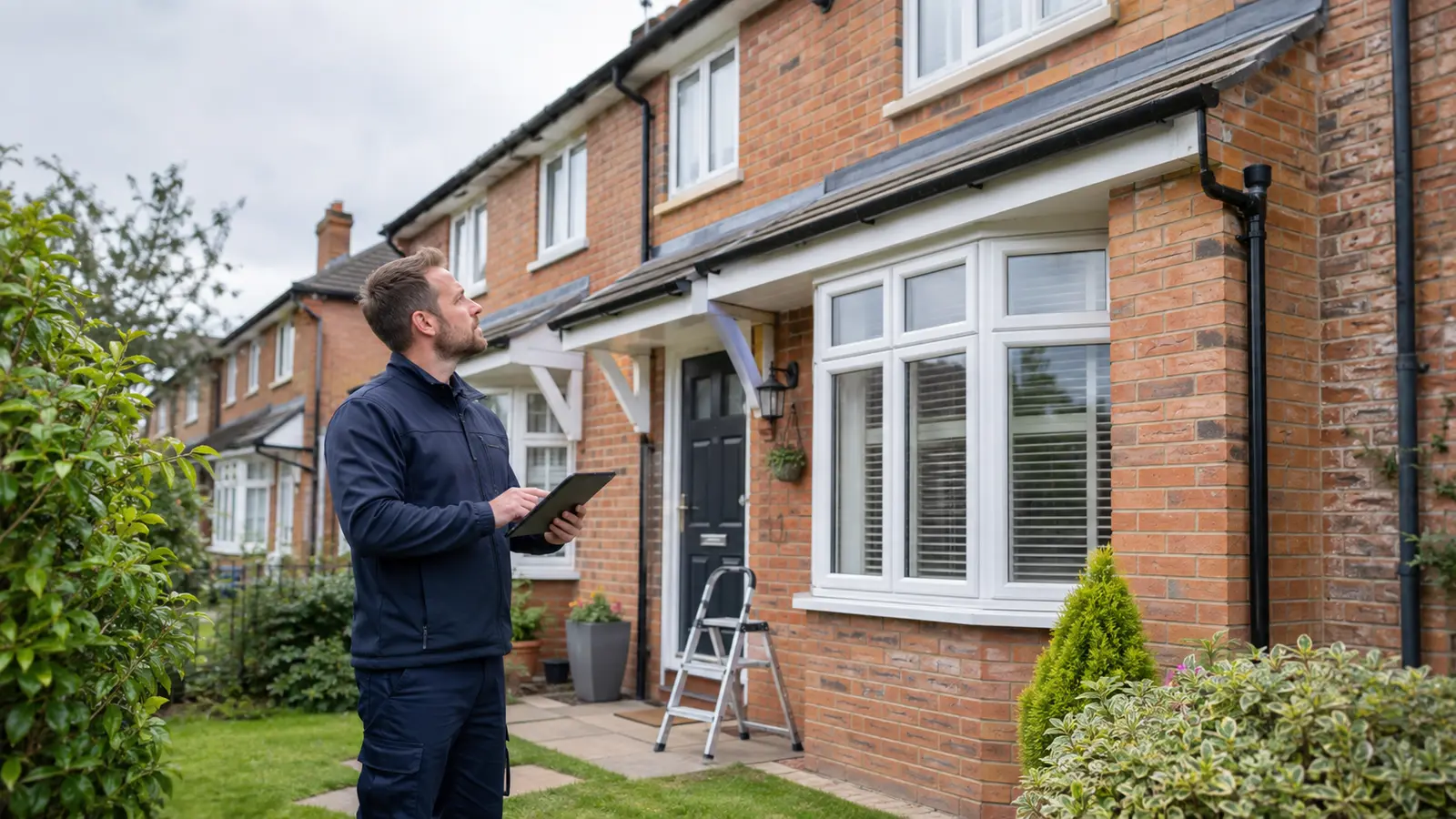
A good mid-term inspection, for example, should not simply confirm that the property is occupied and broadly presentable. It should help create a point-in-time condition record and highlight visible issues that may need follow-up.
Depending on the property and scope of inspection, this can include observations around:
- damp, mould or condensation;
- failed sealants and sanitary fittings;
- leaking plumbing;
- deterioration around windows and doors;
- roof, gutter or drainage concerns visible from accessible areas;
- ventilation issues;
- damaged fixtures and finishes;
- safety or compliance observations; and
- maintenance items that should be planned before they become urgent.
The aim is not to manufacture a long repair list. It is to give the landlord better visibility over the condition of the asset.
Good records are part of asset protection
Condition records are often undervalued until there is a disagreement.
A landlord may remember that a room was in good condition at the start of a tenancy, that a contractor attended, or that an issue was not present six months earlier.
But memory is not a reliable audit trail.
A detailed inventory establishes the starting condition.
Periodic inspections create additional points of comparison.
Photographs provide visual evidence.
Maintenance records show what was identified and what action was taken.
Completion evidence shows whether the issue was actually closed.
Together, these records create a property condition audit trail.
That can help landlords manage maintenance decisions, tenant damage, deposit disputes, contractor follow-up and future works more effectively.
Maintenance and compliance are increasingly connected
Property condition is not only a commercial issue. Landlords in England also have legal responsibilities for areas including the structure and exterior of a rented home, heating and hot-water installations, plumbing and electrical systems, and keeping the property safe and fit for occupation.
Local authorities can use the Housing Health and Safety Rating System (HHSRS) to assess hazards in residential properties, including issues linked to damp, excess cold, electrical safety, fire and other risks.
Energy performance also forms part of the wider asset picture. Where the domestic Minimum Energy Efficiency Standards apply, privately rented homes generally need to meet the current minimum EPC requirements unless a valid exemption applies.
The practical lesson is that maintenance, safety, energy performance and documentation should not be managed as completely separate tasks.
A landlord benefits from having one clear picture of the property and what needs attention.
The Property Asset Care cycle
1. Establish the condition
Begin with a detailed inventory and photographic record.
This gives the landlord a defensible baseline for the tenancy and a clear picture of the property's starting condition.
2. Inspect periodically
Use mid-term inspections to record changes in condition, identify visible deterioration and flag matters requiring further investigation or maintenance.
Inspection frequency should be appropriate to the tenancy, property and access arrangements.
3. Prioritise the findings
Not every observation needs an emergency contractor.
A sensible triage can separate issues into:
- immediate safety concerns;
- short-term repairs;
- preventative maintenance; and
- longer-term improvement or replacement planning.
This helps landlords spend money where it has the greatest effect.
4. Plan improvements
Inspection findings can be considered alongside EPC recommendations, recurring repair history and the expected life of major components such as boilers, roofs, windows and electrical installations.
Planned replacement is usually easier to budget for than emergency failure.
5. Record completion
A maintenance item should not disappear from the system simply because it was instructed.
Retain invoices, certificates, contractor notes, photographs and any relevant follow-up evidence so there is a clear record of what happened.
6. Repeat
Property condition changes through occupation, weather, ageing and normal wear.
Asset Care is therefore a continuous process, not a one-off report.
Protecting rental income is only half the job
Landlords naturally focus on monthly rent and yield.
But there are really two financial interests in a rental property:
income generated by the tenancy and capital tied up in the building.
Protecting the rent while allowing the underlying asset to deteriorate is a false economy.
The strongest rental properties are not simply those producing income today. They are properties that remain safe, lettable, efficient, well documented and attractive to future tenants, buyers and lenders.
That is the purpose of Property Asset Care.
A joined-up landlord property strategy
Skyline Technical Services supports landlords and letting agents across the West Midlands with a more joined-up approach to property condition and compliance, including:
- detailed property inventories;
- mid-term inspections;
- photographic condition records and audit trails;
- EPC assessments and energy advice;
- reactive and planned maintenance support;
- floor plans and 360° property documentation; and
- landlord compliance software and property records.
The objective is to move from isolated reports and reactive repairs to a clearer process:
evidence → action → completion → retained audit trail.
Explore Skyline's landlord compliance approach, book a mid-term inspection or request a maintenance quote.
Property Asset Care checklist
A practical landlord routine can include:
- Create a reliable baseline inventory at the beginning of each tenancy.
- Schedule periodic inspections appropriate to the property and tenancy.
- Keep tenant reports and access records in writing.
- Triage visible issues by safety, deterioration risk and urgency.
- Link maintenance items to photographs and the relevant room or area.
- Keep evidence of contractor instruction and completed works.
- Review recurring repairs to identify where planned replacement may be better value.
- Keep property-condition records and compliance certificates together.
- Review EPC recommendations when planning major repairs or upgrades.
- Recheck completed works where further deterioration could occur.
The purpose is not paperwork for its own sake. It is better information, earlier decisions and stronger control of the property.
FAQ
What is Property Asset Care?
Property Asset Care is Skyline's term for managing a rental property as a long-term asset rather than relying only on reactive maintenance. It combines condition records, periodic inspections, planned maintenance, energy information and completion evidence.
Does regular inspection prevent every major repair?
No. Buildings age and unexpected failures still happen. Regular inspection can, however, improve the chance of identifying visible deterioration earlier and allow landlords to plan work before a defect becomes more serious.
Why are inventories relevant to maintenance?
A detailed inventory gives a landlord a starting condition record. Later inspections can then be compared against that baseline, making changes and deterioration easier to identify and document.
Is a mid-term inspection a specialist building survey?
No. A mid-term inspection is a point-in-time condition record within its agreed scope. It can flag visible issues requiring further investigation, but it does not replace specialist inspections by appropriately qualified professionals where those are required.
Can Skyline manage the whole process?
Skyline can support the property record through inventories, inspections, EPC assessments, maintenance coordination and landlord-compliance workflows. Specialist work is arranged or undertaken by appropriately qualified contractors where required.
Sources and review date: Published 24 August 2026. The article draws on current England landlord repair responsibilities, HHSRS guidance, domestic private-rented energy-efficiency requirements and recent 2026 property-maintenance value analysis. Regulatory requirements can change, so specific legal or enforcement matters should be checked against current official guidance.
Ready to take action?
Get a fast, no-obligation quote from our accredited team — covering EPCs, surveys, retrofit and more.
Related Articles

Are letting-agent fees rising after the Renters’ Rights Act?
Reports suggest some landlords face new letting-agent charges after the Renters’ Rights Act. See what is confirmed, what is reported and what to check.
Private Rented Sector Database: Records to Prepare
The Private Rented Sector Database is planned from late 2026. Here are the property and compliance records landlords should organise now.