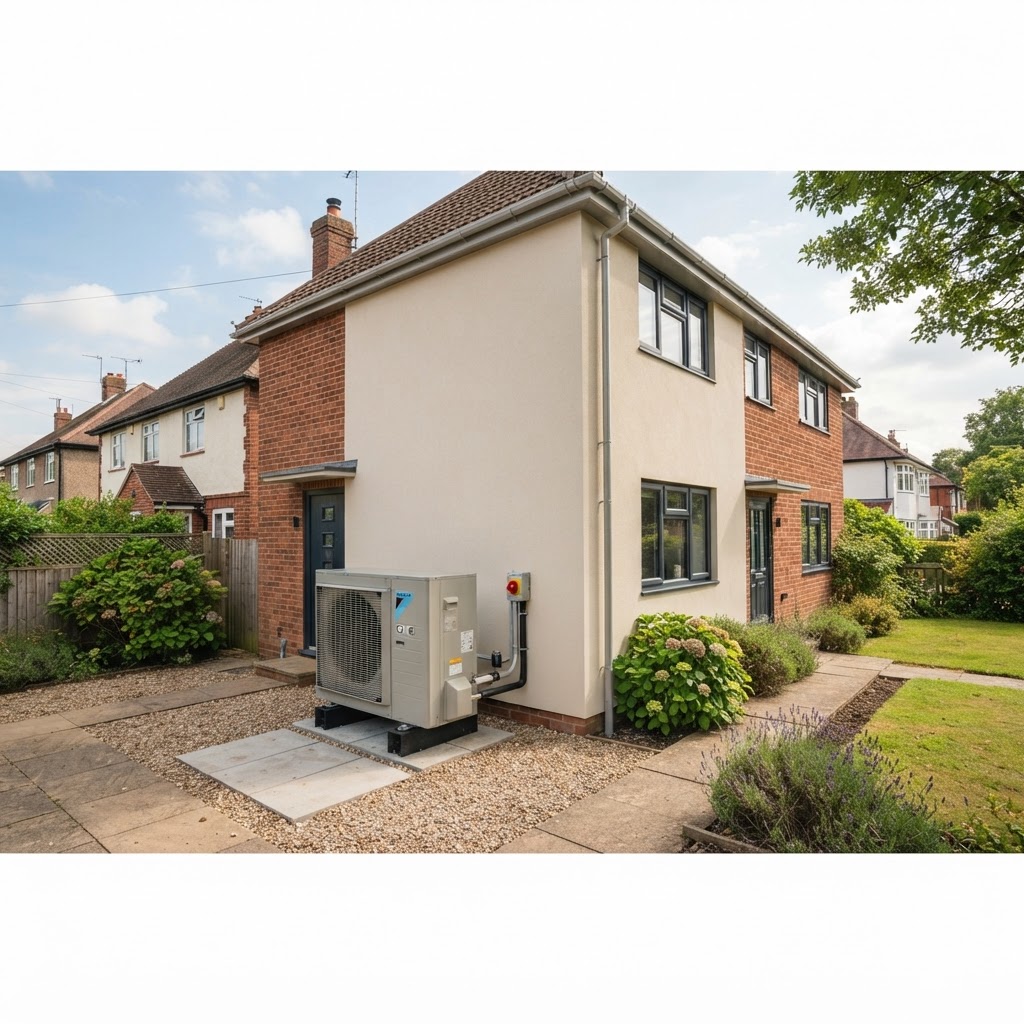
Understanding Your Retrofit Assessment Report: A West Midlands Guide
Learn how to decode your PAS 2035 Retrofit Assessment Report and Whole House Plan to unlock up to £30,000 in West Midlands energy grants.
Understanding Your Retrofit Assessment Report: A West Midlands Guide
If you are a property owner in Birmingham, Coventry, or the wider West Midlands, you have likely heard that the path to a warmer, more efficient home—and the key to unlocking thousands of pounds in government funding—starts with a retrofit assessment. However, receiving the final Retrofit Assessment Report can be overwhelming. Unlike a standard two-page Energy Performance Certificate (EPC), a PAS 2035-compliant report is a comprehensive technical document that outlines the future of your property for the next 20 to 30 years.
This guide explains exactly what is inside a Retrofit Assessment Report, how to interpret the Whole House Plan (WHP), and how to use this data to secure funding through the Warm Homes Plan, ECO4, or the Boiler Upgrade Scheme. Whether you are a landlord preparing for the 2030 EPC C deadline or a homeowner in Wolverhampton looking to slash energy bills, understanding this report is your first step toward a successful renovation.
What is a Retrofit Assessment Report?
A Retrofit Assessment Report is the foundational document required by the PAS 2035:2023 standards, which govern all government-funded energy efficiency projects in the UK. According to The Retrofit Academy, the process ensures that energy improvements are not done in isolation, which can unintentionally damage a building's performance or lead to issues like trapped moisture.
Unlike a standard EPC, which provides a snapshot of theoretical energy use, a Retrofit Assessment Report is an evidence-based deep dive into three specific areas:
1. The Energy Report
While it includes an updated RdSAP (Reduced Data Standard Assessment Procedure) calculation, the retrofit energy report goes further. It looks at the actual thermal performance of your specific wall types, floor constructions, and roof voids. It identifies exactly where heat is escaping—whether through the solid brickwork common in Birmingham’s Victorian terraces or the uninsulated cavities of 1970s semi-detached homes in Solihull.
2. The Condition Report
This is perhaps the most critical section for West Midlands landlords. The assessor performs a detailed survey of the property’s current state, looking for structural defects, damp, and mould. As noted by Construction AS, this prevents the 'isolation' issue where adding insulation to a damp wall could cause rot. If your property has existing damp issues, the report will mandate that these are fixed before any energy measures are installed.
3. The Occupancy Assessment
This section records how the building is actually used. Do you heat every room? What are your typical thermostat settings? How many people live in the property? This data allows the assessor to calculate 'real-world' energy savings rather than just theoretical ones, ensuring the proposed upgrades are cost-effective for your specific lifestyle or your tenants' needs.
Decoding the Whole House Plan (WHP)
The 'output' of your assessment is the Whole House Plan. This is a medium-to-long-term roadmap that suggests a sequence of improvements. You do not have to complete every measure at once, but the plan ensures that whatever you do today doesn't prevent you from doing something else in five years.
The Fabric-First Principle
Every professional Whole House Plan follows the 'fabric-first' methodology. This means the report will almost always prioritise insulation and air-tightness before suggesting a new heating system. For a typical property in Dudley or Walsall, the sequence might look like this:
- Phase 1: Loft insulation and cavity wall injection (Fabric).
- Phase 2: High-performance glazing and draught-proofing (Fabric/Air-tightness).
- Phase 3: Installation of an Air Source Heat Pump (Services).
By following this order, you ensure that when you eventually install a heat pump, the property is efficient enough to run it at a low, cost-effective temperature.
The Medium-Term Improvement Plan (MTIP)
The MTIP is a specific table within your report that lists recommended measures, their estimated costs, and the predicted jump in your EPC rating. According to NearMeTrades, a full retrofit assessment and coordination package can cost between £800 and £2,000, but it provides the technical justification needed to claim grants worth upwards of £15,000 to £30,000.
Why Ventilation is the Most Important Section
One of the most common reasons a retrofit project fails—or leads to damp and mould—is a lack of adequate ventilation. When you insulate a home, you make it more airtight. If you don't simultaneously improve ventilation, moisture from cooking, bathing, and breathing stays trapped inside.
Your Retrofit Assessment Report will include a Ventilation Strategy. This might require:
- The installation of constant-running trickle vents in windows.
- Undercutting internal doors to allow airflow.
- Installing humidistat-controlled extractor fans in 'wet rooms' (kitchens and bathrooms).
For landlords, this section is vital for Awaab’s Law compliance. A PAS 2035-compliant report provides the professional evidence that you have considered moisture risk, protecting you from future liability regarding tenant health.
Using Your Report to Secure West Midlands Grants
In 2026, the grant landscape in the West Midlands is shifting. Having a valid Retrofit Assessment Report is the 'golden ticket' to several funding streams:
| Grant Scheme | What it Covers | Eligibility | | :--- | :--- | :--- | | Warm Homes Local Grant (WHLG) | Up to £30,000 for insulation, solar, and heat pumps. | Low-income households or D-G rated properties in specific West Midlands postcodes. | | ECO4 (Closing Dec 2026) | Whole-house upgrades for those on qualifying benefits. | Private tenants and homeowners; requires a full PAS 2035 assessment. | | Boiler Upgrade Scheme (BUS) | £7,500 toward an Air Source Heat Pump. | All homeowners; requires a valid EPC with no outstanding loft/cavity insulation recommendations. | | Great British Insulation Scheme | Single measures like loft or cavity wall insulation. | Council Tax bands A-D in England with EPC D-G. |
As highlighted by the Energy Efficiency Hub, the Warm Homes Plan is now the primary umbrella for these grants. In areas like Stafford and East Staffordshire, local authorities are using these reports to verify that public money is being spent on measures that will genuinely move a property toward an EPC C rating.
Local Context: West Midlands Housing Challenges
Retrofitting in the West Midlands presents unique challenges that a generic national guide might miss. Our region has a high concentration of 'hard-to-treat' homes:
- Victorian Terraces (Birmingham/Coventry): These often have solid brick walls. Your report will likely discuss External Wall Insulation (EWI). This is a major intervention that requires a Retrofit Designer to ensure the building's character is preserved and moisture can still escape.
- 1930s Semi-Detached (Wolverhampton/Stourbridge): These often have small cavities or 'suspended' timber floors. The report will assess the risk of floor insulation and whether the sub-floor ventilation is sufficient to prevent joist rot.
- Rural Off-Gas Properties (Staffordshire): For homes not connected to the gas grid, the report will focus heavily on the transition to heat pumps and the potential for solar PV to offset high electricity costs.
How Skyline Technical Services Can Help
Navigating PAS 2035 compliance is complex, but you don't have to do it alone. At Skyline Technical Services, we provide the professional expertise needed to turn a technical report into a completed project.
- Qualified Retrofit Assessors: We conduct thorough, TrustMark-registered assessments across Birmingham, Solihull, and the wider West Midlands, ensuring your data is accurate and grant-ready.
- Retrofit Coordination: We don't just hand you a report; we can oversee the entire process, ensuring installers follow the Whole House Plan and that all work is lodged correctly on the TrustMark Data Warehouse.
- Integrated Surveys: If you are buying a property, we can combine a RICS Level 2 or 3 Survey with a Retrofit Assessment, giving you a complete picture of both the building's health and its energy potential before you exchange contracts.
Ready to start your retrofit journey? Book your assessment today or use our Grant Checker to see which funding routes are open to you.
Frequently Asked Questions
Is a Retrofit Assessment the same as an EPC? No. An EPC is a basic rating for selling or letting. A Retrofit Assessment is a detailed, multi-hour survey that includes a condition report, occupancy assessment, and a 20-year Whole House Plan. It is much more detailed and is required for most grants.
How much does a Retrofit Assessment cost in the West Midlands? For a standard three-bedroom semi-detached home, expect to pay between £400 and £600 for the assessment. If you require a full Retrofit Coordination service for a grant application, the total professional fees usually range from £800 to £1,500.
How long is the report valid for? A Retrofit Assessment Report is typically valid for as long as the property condition remains the same, but for grant purposes (like ECO4), the data usually needs to be refreshed if it is more than 12-24 months old or if the EPC has expired.
Can I choose which measures to install from the Whole House Plan? Yes, if you are self-funding. However, if you are using government grants, the scheme will usually dictate that you must follow the 'primary' measures identified in the plan, starting with insulation and ventilation.
Do I need a Retrofit Assessment for the Boiler Upgrade Scheme? Technically, the Boiler Upgrade Scheme (BUS) only requires a valid EPC with no outstanding recommendations for loft or cavity wall insulation. However, a full Retrofit Assessment is highly recommended to ensure your home is actually 'heat pump ready' and won't result in high running costs.
Ready to take action?
Get a fast, no-obligation quote from our accredited team — covering EPCs, surveys, retrofit and more.
Related Articles
The 2026 West Midlands Retrofit Transition: ECO4 to Warm Homes
Navigate the 2026 shift from ECO4 to the Warm Homes Local Grant in the West Midlands. Learn about £30k grants, PAS 2035, and new eligibility for Birmingham owners.
West Midlands Warm Homes Plan: A 2026 Guide for Property Owners
See how the Warm Homes Plan and ECO4 connect with the government's intended 2030 higher EPC standard for privately rented homes.