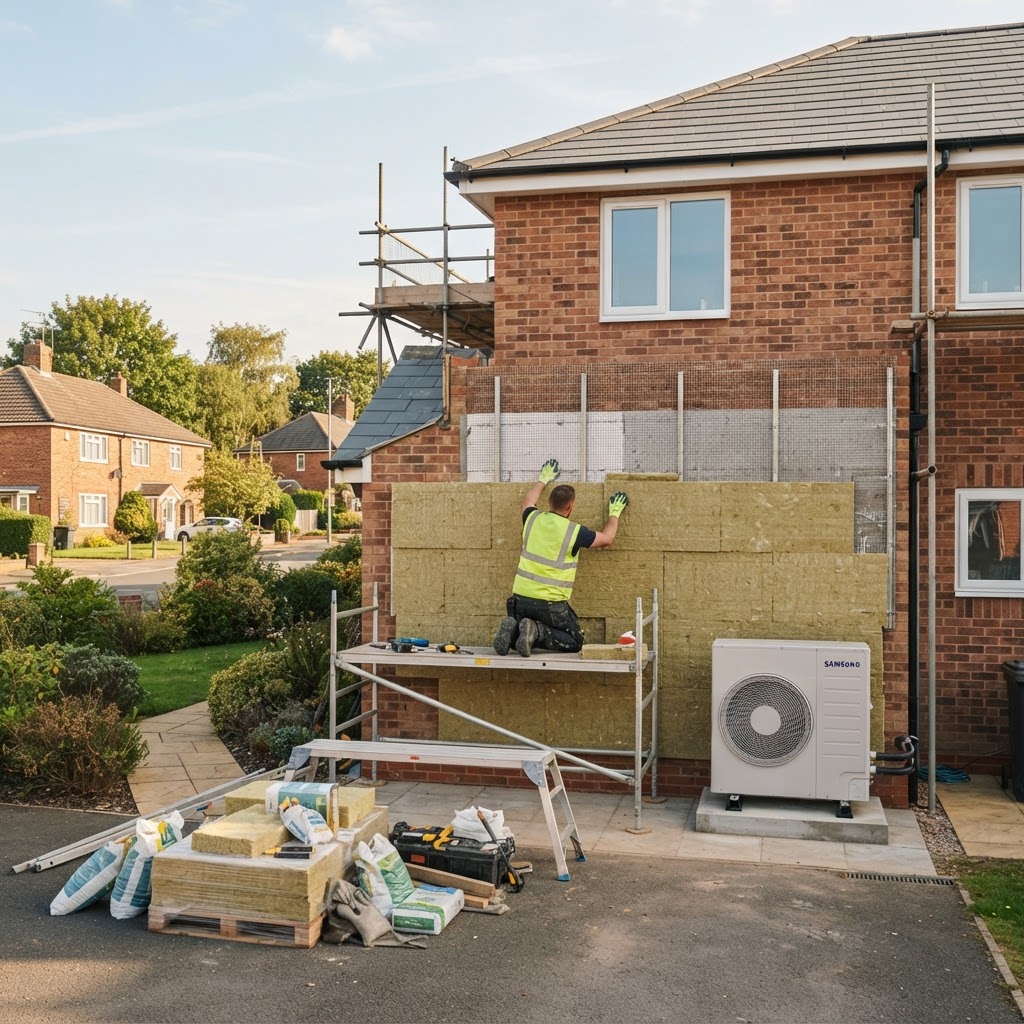
West Midlands Warm Homes Plan: A 2026 Guide for Property Owners
See how the Warm Homes Plan and ECO4 connect with the government's intended 2030 higher EPC standard for privately rented homes.
Regulatory position — 4 September 2026: Current domestic MEES in England and Wales requires EPC E unless a valid exemption applies. Government intends an EPC C-equivalent standard from 1 October 2030, but the higher standard, planned £10,000 cap and future £30,000 maximum penalty remain subject to further legislation and Parliamentary approval. Check current GOV.UK guidance.
The West Midlands Warm Homes Strategy: Navigating the £15bn Plan and 2030 EPC C Deadline
The West Midlands is currently at the epicentre of the UK’s energy efficiency revolution. According to the latest government data released in February 2026, the West Midlands has the highest proportion of fuel-poor households in England, at a staggering 16.4%. This regional disparity has prompted a significant response in the government’s updated £15bn Warm Homes Plan, which aims to upgrade 5 million homes across the country by 2030. For property owners in Birmingham, Coventry, Wolverhampton, and the surrounding areas, this plan represents both a significant regulatory challenge and a unique opportunity to access unprecedented levels of funding.
As we move into the second half of 2026, the landscape for landlords and homeowners is shifting rapidly. The Department for Energy Security and Net Zero (DESNZ) has recently confirmed the trajectory for Minimum Energy Efficiency Standards (MEES), setting a firm deadline of October 2030 for all privately rented domestic properties to achieve an EPC rating of C. With the ECO4 scheme set to close in December 2026 and the new Warm Homes Local Grant gaining momentum, understanding the intersection of these policies is critical for protecting property values and ensuring legal compliance across the West Midlands.
The West Midlands Fuel Poverty Challenge
The scale of the challenge in our region cannot be overstated. While the national average for fuel poverty sits significantly lower, the West Midlands’ 16.4% rate highlights a structural issue with the region’s ageing building stock. From the Victorian terraces of Dudley and Walsall to the post-war estates in Solihull and Stafford, thousands of properties are currently failing to provide adequate thermal comfort at an affordable cost. The Warm Homes Plan specifically identifies the West Midlands as a priority zone for the allocation of the £15bn retrofit pot, aiming to tackle the 'structural problem' of energy-inefficient housing.
For landlords, this isn't just a social issue; it's a financial one. Properties with low EPC ratings are increasingly subject to what market analysts call the 'brown discount'—a reduction in market value and rental appeal compared to energy-efficient 'green' properties. By engaging with our EPC assessment services, landlords can identify exactly where their properties stand and what specific measures are required to move from a failing E or F grade to the mandatory C rating.
The Warm Homes Plan 2026: What’s New?
The updated Warm Homes Plan, detailed in government publications throughout early 2026, introduces several key pillars designed to accelerate the UK’s retrofit progress:
- £15 Billion Funding Commitment: This is the largest single investment in home energy efficiency in UK history. The funding is split between direct grants, low-interest loans, and social housing decarbonisation funds.
- The 5 Million Home Target: The government has committed to upgrading 5 million homes over the current Parliament, focusing on insulation, low-carbon heating, and solar integration.
- Warm Homes Local Grant: Replacing several smaller, fragmented schemes, this grant provides up to £15,000 for eligible homeowners and landlords to install energy-saving measures. Unlike previous iterations, this grant prioritises a 'fabric-first' approach, ensuring insulation is addressed before high-tech heating systems are installed.
- Consumer Protection Reform: Following reports of poor installations in previous years, the 2026 plan introduces stricter oversight for installers, mandating PAS 2035 standards for all government-funded works.
The Government's Intended 2030 EPC Standard
In January 2026, the government published its response to the consultation on higher energy standards in the Private Rented Sector. It sets out the intended policy direction, but the higher standard and enforcement framework still require further legislation and Parliamentary approval:
- 1 October 2030: Intended single compliance date for an EPC C-equivalent higher standard across new and existing tenancies, subject to legislation.
- The 'Early Action' Rule: In a significant move to reward proactive landlords, the government announced that any property achieving an EPC C or above before October 1, 2029, will be treated as compliant until that EPC expires (usually 10 years). This allows landlords to use current assessment metrics rather than potentially stricter future standards.
- The £10,000 Cost Cap: The maximum amount a landlord is required to spend on energy improvements remains capped at £10,000 per property. If a property cannot reach EPC C after spending this amount, an exemption can be registered.
- New EPC Metrics: The government is moving toward a new 'Home Energy Model' to replace SAP. Landlords who wait until the last minute may find the goalposts have moved, making early assessment via a RICS survey package or a dedicated EPC audit essential.
Navigating the Grant Landscape in the West Midlands
With multiple schemes running concurrently, property owners in Birmingham and Wolverhampton often find the 'grants maze' difficult to navigate. Here is the current status of the major schemes as of mid-2026:
ECO4 (Energy Company Obligation)
Status: Closing December 31, 2026. Focus: Low-income and vulnerable households. ECO4 takes a 'whole-house' approach, often providing free internal wall insulation, air source heat pumps, and solar panels. If your property is in a lower-income area of Coventry or Walsall, you should check your grant eligibility immediately before this scheme expires.
Boiler Upgrade Scheme (BUS)
Status: Active with increased funding. Focus: Providing £7,500 towards the installation of air source or ground source heat pumps. The government has increased the annual allocation for this scheme, making it a primary route for homeowners in Solihull and Stafford looking to decarbonise their heating systems.
Great British Insulation Scheme (GBIS)
Status: Active. Focus: Single-measure upgrades, primarily loft and cavity wall insulation. This is ideal for properties that are already relatively efficient but need a small boost to reach the EPC C threshold.
Warm Homes Local Grant
Status: Rolling out across West Midlands local authorities. Focus: A flexible grant for households with an income under £36,000 or those living in specific deprived postcodes. This grant is often delivered in partnership with the West Midlands Combined Authority (WMCA).
The PAS 2035 Retrofit Process: Why It Matters
If you are applying for a grant under the Warm Homes Plan, you will likely be required to follow the PAS 2035 framework. This is a professional standard for the 'whole-house' retrofit of dwellings. It ensures that improvements are not made in isolation, which can lead to issues like damp and mould.
The process typically involves:
- Retrofit Assessment: A qualified professional visits the property to record its current condition, occupancy, and energy use. You can book a retrofit assessment with our qualified team to start this process.
- Retrofit Coordination: A coordinator develops a Medium-Term Improvement Plan (MTIP), outlining the best sequence of works over the next 20 years.
- Design and Installation: Qualified designers and installers carry out the work to high standards.
- Evaluation: A post-installation check to ensure the measures are performing as expected.
What This Means for Birmingham & West Midlands Property Owners
For property owners in our region, the message is clear: the 'wait and see' approach is no longer viable. The West Midlands Combined Authority has estimated that retrofitting the region’s 1.2 million homes will require £24.4bn in total investment. While the government is providing a significant portion of this through the Warm Homes Plan, the demand for qualified assessors and installers is expected to skyrocket as the 2030 deadline approaches.
In Birmingham, the city council is already pushing for higher standards in social housing, which is setting a benchmark for the private sector. In Coventry and Wolverhampton, local retrofit hubs are being established to help residents access the £15bn pot. Landlords in Dudley and Walsall, where older housing stock is prevalent, should be particularly concerned with the 'Early Action' rule. By securing an EPC C rating now, you can lock in your compliance for the next decade and avoid the rush (and price hikes) expected in 2029.
Furthermore, the Renters' Rights Bill and Awaab's Law are introducing stricter requirements for property condition. Energy efficiency is no longer just about bills; it's about health. A cold, damp home in Stafford or Solihull is now a significant legal liability for a landlord.
Why Choose Skyline Technical Services?
At Skyline Technical Services, we specialise in helping West Midlands property owners navigate the complexities of energy compliance and property health. We serve Birmingham, Coventry, Wolverhampton, Walsall, Dudley, Solihull, Stafford, and the wider West Midlands region with expert, local knowledge.
- Local Expertise: We understand the specific building archetypes of the West Midlands, from Victorian brickwork to mid-century system-built homes.
- Accredited Professionals: Our team includes qualified EPC assessors, Retrofit Assessors, and RICS surveyors.
- Comprehensive Services: Beyond energy, we offer property inventory services and full building surveys to give you a complete picture of your investment.
- Grant Guidance: We don't just assess; we help you understand which grants (ECO4, BUS, Warm Homes) are most applicable to your specific property and circumstances.
Frequently Asked Questions
Q: Is the 2030 EPC C deadline definitely happening? A: Yes. The government confirmed in February 2026 that all domestic private rented properties must reach EPC C by October 1, 2030. The previous uncertainty has been resolved with this firm legislative roadmap.
Q: Can I get a grant if I am a landlord? A: Yes, landlords can access several grants, including the Boiler Upgrade Scheme and the Warm Homes Local Grant, though eligibility often depends on the tenant's income or the property's location in a priority area.
Q: What is the 'Early Action' rule for EPCs? A: If you achieve an EPC C rating before October 1, 2029, your property is considered compliant until that EPC expires, even if the government introduces new assessment metrics in the meantime.
Q: How much does a Retrofit Assessment cost in the West Midlands? A: Costs vary depending on the size of the property, but they typically range from £200 to £500. This assessment is a mandatory first step for most high-value government grants.
Ready to future-proof your property? Contact Skyline Technical Services today to book your EPC or Retrofit Assessment and ensure you don't miss out on the £15bn Warm Homes Plan funding.
Ready to take action?
Get a fast, no-obligation quote from our accredited team — covering EPCs, surveys, retrofit and more.
Related Articles
Understanding Your Retrofit Assessment Report: A West Midlands Guide
Learn how to decode your PAS 2035 Retrofit Assessment Report and Whole House Plan to unlock up to £30,000 in West Midlands energy grants.
The 2026 West Midlands Retrofit Transition: ECO4 to Warm Homes
Navigate the 2026 shift from ECO4 to the Warm Homes Local Grant in the West Midlands. Learn about £30k grants, PAS 2035, and new eligibility for Birmingham owners.